

Blogs
Home
📋 Table of Contents
Biometric Attendance System vs Traditional Attendance
06 Mar, 2026
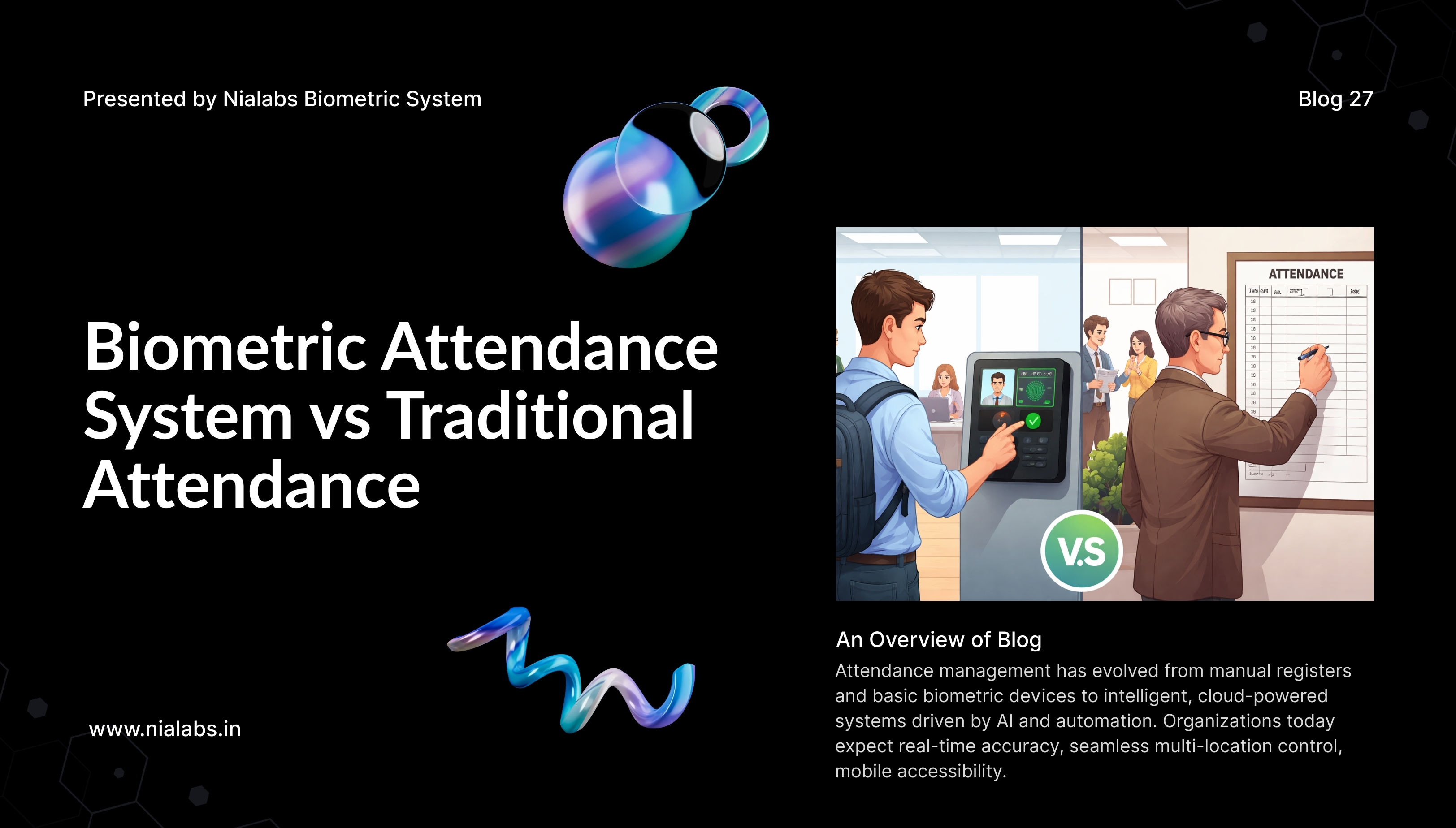
Monitoring attendance is important while managing any organization, school, college, industry, hospital, or office space. For years, conventional attendance systems — such as paper registers, punch cards, and manual Excel spreadsheets were commonly used. Yet, in the era of digital transformation and automation, biometric attendance systems have surfaced as the most precise, safe, and stable solution.
In this blog, we will discuss the main differences between traditional attendance systems and biometric attendance systems, evaluate their benefits and drawbacks, and offer insights into why enterprises are moving so fast towards biometric solutions.
What is Traditional Attendance?
Traditional attendance is the capture of employee or student attendance using manual or semi-manual systems.
Typical instances include:
-
Paper-based attendance registers
-
Sign-in/ sign-out sheets
-
Punch cards
-
Manual Excel entries
-
Attendance with ID card, without biometric verification
These systems have a strong human involvement and supervision, and thus are error-prone and susceptible to abuse.
Drawbacks of Traditional Attendance Tracking Systems
The traditional methods might seem simple and free in the beginning, but they have a few flaws:
-
Human errors while entering the data
-
Tracking attendance consumes a lot of time
-
Buddy punching or proxy attendance
-
Difficult to accurately report running
-
No tracking in real time
-
Non-integration with any payroll/ school ERP system
These issues become more pronounced and more expensive to resolve as an organization expands.
What is a Biometric Attendance System
A biometric attendance system is an attendance management system that uses the unique biological traits of a person, such as fingerprints, facial features, iris patterns, or palm veins, to identify an individual and mark his/her attendance automatically.
Our Nialabs Biometric attendance system solutions enable you to achieve high precision, real-time tracking, and easy integration with HR, payroll, and school management solutions.
Following is the popular types of biometric attendance:
-
Face recognition (contactless-based) system
-
Iris recognition system
-
Multi-modal biometrics systems
Key Differences: Biometric vs Traditional Attendance
Let’s analyze the comparison in terms of key factors:
1. Precision and dependability
Traditional Attendance:
The manual attendance system can be manipulated, and human errors are inevitable.
Proxy attendance is a rampant issue, especially in large corporations and educational organizations.
Biometric Attendance:
Biometric devices commit to 100% identity. Since the features are unique, it becomes difficult to spoof attendance.
As biometric characteristics are unique, attendance manipulation is almost impossible. This results in excellent and dependable data.
2. Time Efficiency:
Traditional Attendance:
Roll calling, signing registers, or typing information by hand takes up a lot of time, especially in schools, factories, and large offices.
Biometric Attendance:
Attendance is taken in seconds with a simple scan of a barcode or with facial recognition. This drastically reduces queues, delays, and work for the administration.
3. Attendance fraud and proxy concerns
Traditional Attendance:
Proxy attendance and buddy punching are both problems in need of addressing. It is not possible to control this problem without supervision.
Biometric Attendance:
The biometric system also prevents proxy attendance, as no one can register for attendance on behalf of someone else.
4. Data Management and Reporting
Traditional Attendance:
Reports must be run by hand, which is a time-consuming, error-prone process.
It is also difficult to track historical data.
Biometric Attendance:
Biometric systems provide automatic reporting capabilities, such as:
-
Daily attendance
-
Late arrivals and early exits
-
Overtime records
-
Monthly summaries
For audits, compliance, and processing payroll, the data can be easily exported.
5. Integration with ERP and Payroll
Traditional Attendance:
Manual attendance details are to be re-entered into the payroll or HR systems, which is an extra labour-intensive and error-prone process.
Biometric Attendance:
Current biometric systems are fully Nialabs solutions integrated:
-
Payroll software
-
HRMS
-
ERP solutions
-
School management software
This ensures that payroll and statutory commitments are accurately calculated.
6. Security & Data Integrity
Traditional Attendance:
Registers on paper are subject to loss, damage, or tampering. There is no access control.
Biometric Attendance:
Biometric data are encrypted and stored securely. Attendance logs are only accessible to valid users, so the information is safe and unaltered.
7. Cost Guide for consideration:
Traditional Attendance:
Seemingly inexpensive in the short term, hidden costs such as paperwork, mistakes, and the need to compensate for lost time do add up.
Biometric Attendance:
The initial hardware and software costs can be high, but the labor, error, and fraud-related costs could result in making the solution economically feasible over the longer term.
8. Scalable and Flexible:
Traditional Attendance:
This is possible when the company size is small, and when it is a single-location company, i.e., it has just one branch.
Biometric Attendance:
Cloud biometric solutions are scalable: you can keep adding branches and locations, and manage them all from one central dashboard.
Why Organizations Switch to Biometric Attendance Systems?
The organizations in India are adopting a biometric attendance monitoring system due to the following reasons:
-
Government regulations and audit requirements
-
Growing attention to productivity
-
Increase in remote, multi-location, and mobile workforces
-
Demand for contactless solutions (especially face recognition)
-
Real-time data and automation needs
Schools, manufacturing units, hospitals, IT companies, and corporates are now going for biometric solutions to simplify attendance management and make it more efficient.
Why Nialabs Biometric Attendance Systems?
Nialabs provides high-end solutions in biometric attendance for schools, industries, and enterprises that include:
-
High-accuracy fingerprint and face recognition
-
Cloud-based real-time monitoring
-
Seamless payroll and ERP integration
-
Intuitive dashboards
-
Strong data security and privacy compliance
-
After-sales service you can trust
Upgrade from a manual system or an older attendance method that’s no longer working for you with an easy-to-use, future-ready system from Nialabs.
Conclusion:
The solution is clear when considering biometric attendance systems vs traditional attendance. Traditional systems may be suitable for very small setups, but they lack accuracy, security, and efficiency. A biometric attendance system provides:
-
Increased accuracy
-
No proxy attendance
-
Time saving
-
Automated reporting
-
Stronger compliance and scalability
Modern organizations striving for greater efficiency and accountability can no longer consider biometric attendance in India to be a luxury- it is a necessity.
✍️ Muskan Singh
Hi, I'm Muskan Singh, a content writer passionate about exploring how technology, EdTech, and SaaS are shaping the...
Show More📞 Get In Touch
We'd Love to Hear From You!
✍️ Muskan Singh
Hi, I'm Muskan Singh, a content writer passionate about exploring how technology, EdTech, and SaaS are shaping the...
Show More📞 Get In Touch
We'd Love to Hear From You!
Related Blogs
Best 5 AI-Powered Attendance Systems for Modern Workplaces
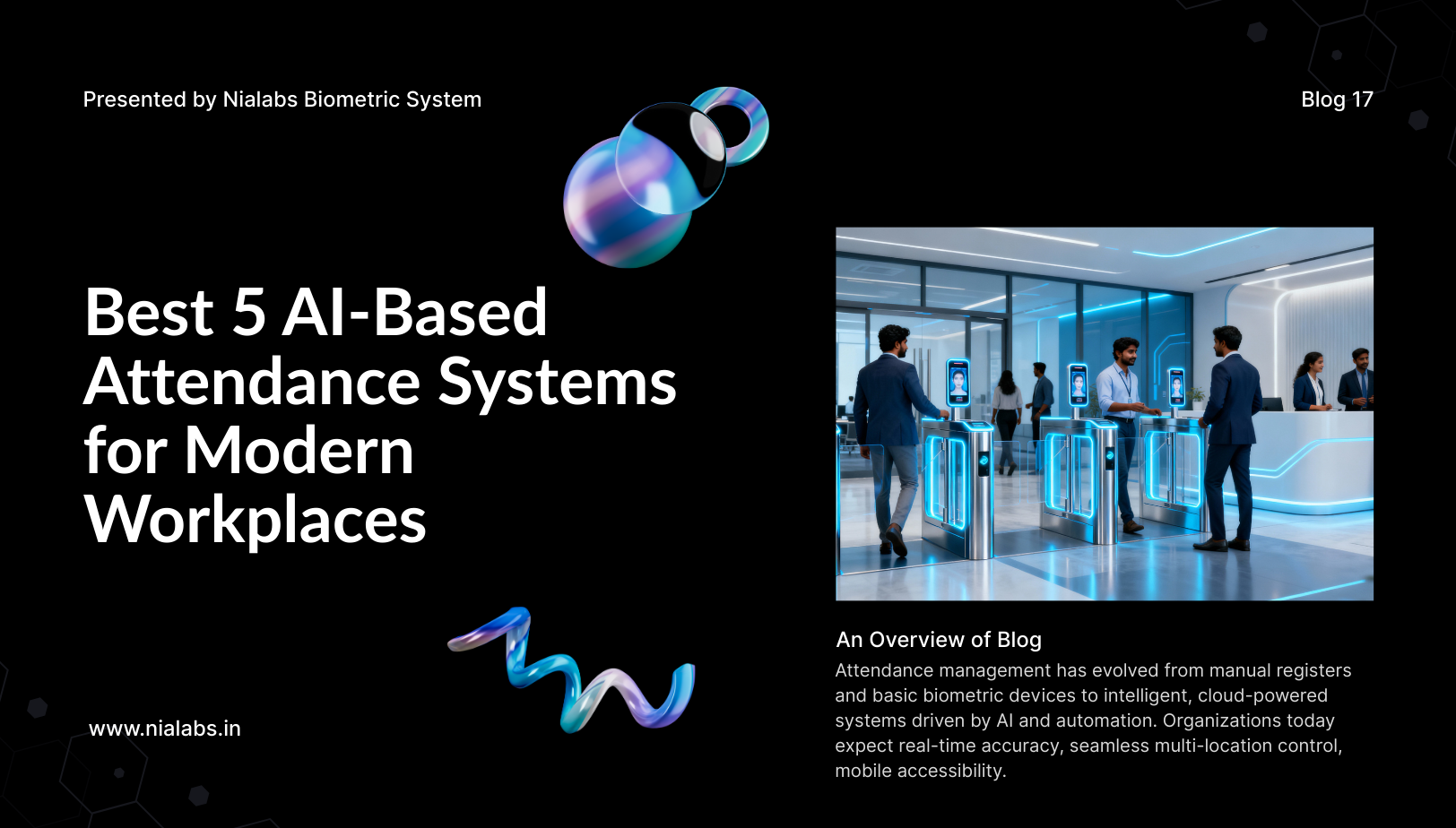
An AI-powered attendance system uses artificial intelligence and biometric/face recognition (or other biometric methods) to automatically identify employees and mark their attendance—replacing manual registers, swipe cards, or fingerprint scanners.
Top 10 Features A Modern Attendance System Should Have
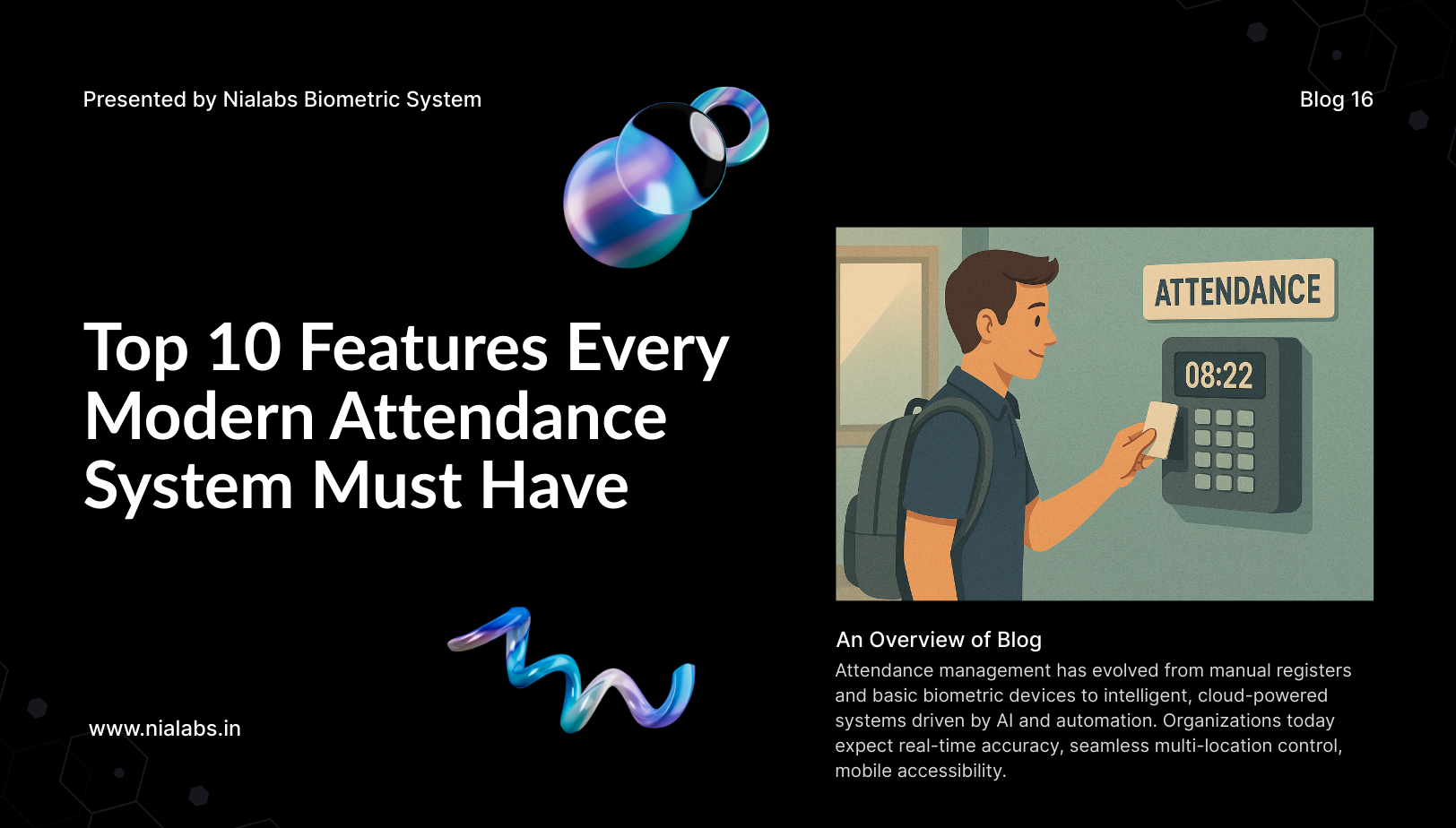
Discover the top 10 features every modern attendance system should offer, including biometric tracking, mobile attendance, real-time reporting, cloud access, and seamless payroll integration.
How AI is Transforming the Biometric Attendance System
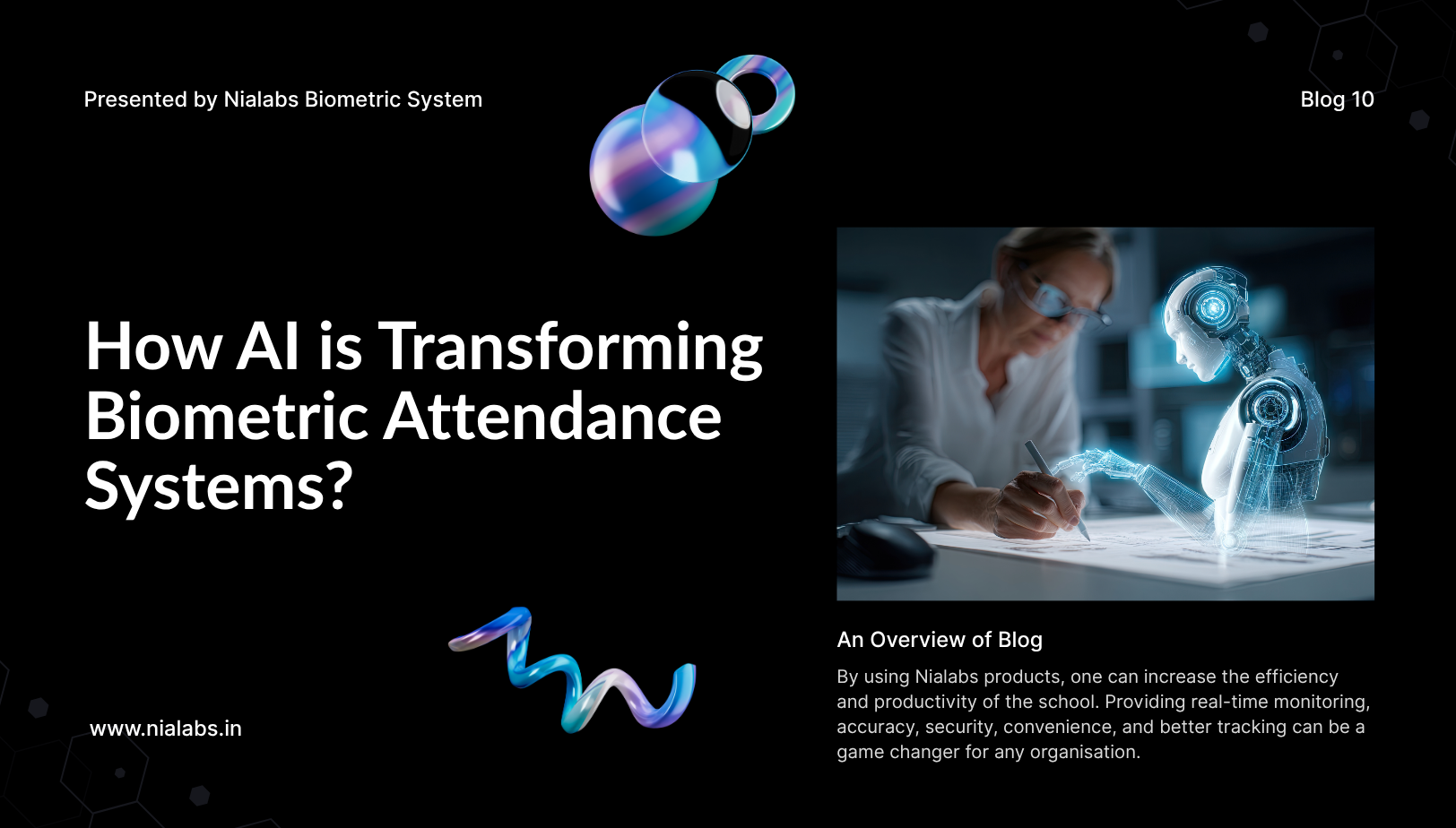
Artificial Intelligence (AI) is revolutionizing the way biometric attendance systems operate, making them faster, smarter, and more secure than ever before. Traditional biometric systems relied solely on fingerprint or facial recognition to mark attendance. However, with the integration of AI, these systems now offer real-time facial recognition, live detection, predictive analytics, and cloud-based data management, ensuring accuracy and efficiency at every step.