

Blogs
Home
📋 Table of Contents
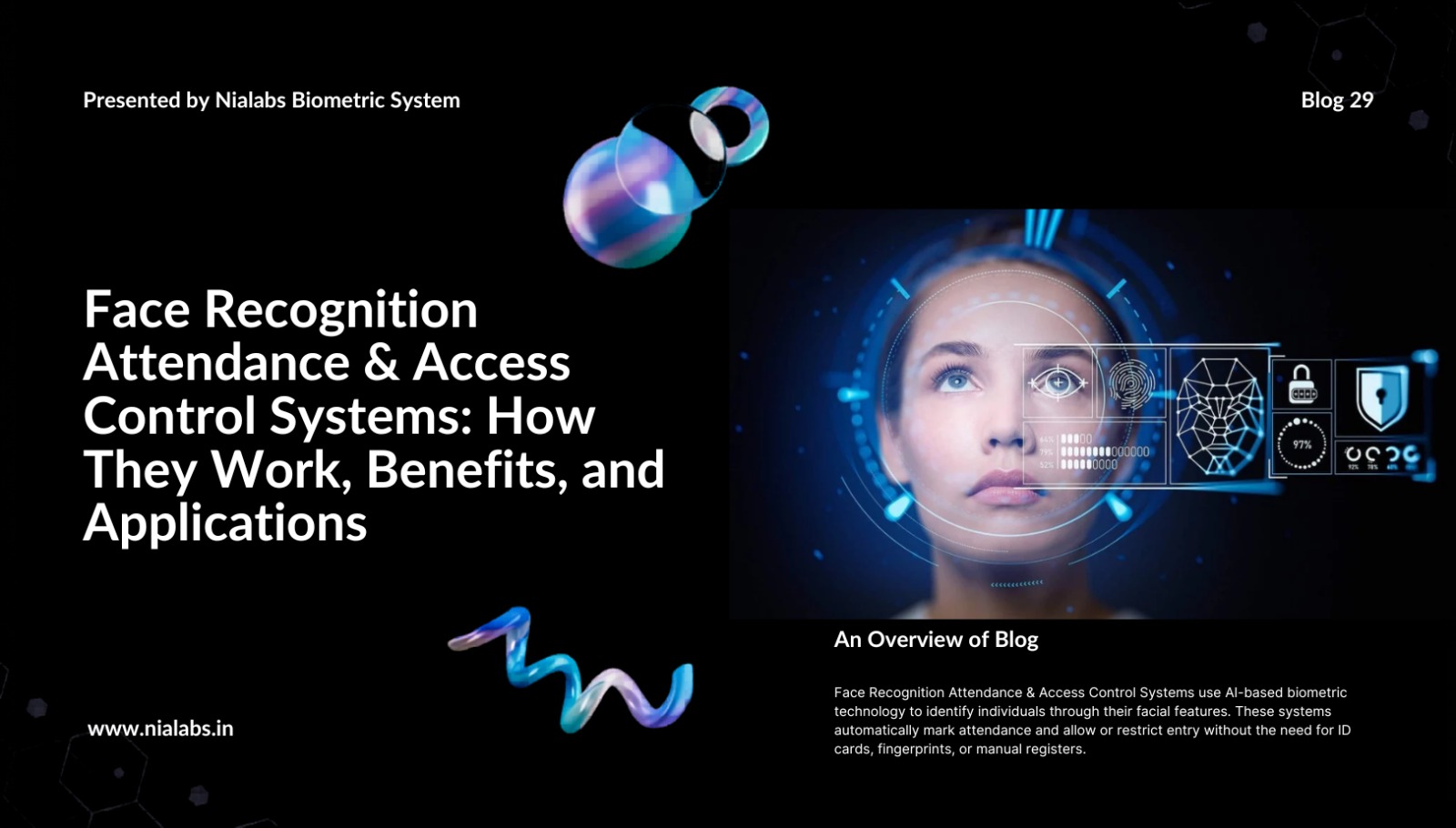
Face Recognition Attendance & Access Control Systems: How They Work, Benefits, and Applications
17 Mar, 2026
1. Introduction
To improve security and to efficiently manage the workforce, intelligent technology is now increasingly being employed in office environments. Among them, the Facial Recognition Attendance System is the most intelligent and sensitive, which identifies a person by facial recognition.
Based on traditional attendance systems like registers and fingerprint attendance systems, we now have AI- based face recognition attendance systems that are a contactless, faster, and more secure way of taking attendance. When used in conjunction with an access control system, they can also control access to secure areas, thus restricting access to authorized personnel only.
The Biometric Attendance Systems based on the face recognition technology are now changing the attendance and the security management of the organization in corporate offices, schools, hospitals, and government agencies.
2. What Is Face Recognition Technology?
Facial recognition is a form of biometric identification that employs AI and computer vision to recognize an individual after processing their facial characteristics.
The characteristic features of the face are:
-
Shape of the nose
-
Shape of the jawline
-
Face shape
This information is turned into a digital facial template, which is saved in a secure database. Once the person shows up again, it matches their live image with previously stored ones to confirm who they are.
Face recognition technology is now prevalent in biometric time and attendance devices, mobile phones, identity verification systems, and a variety of security applications.
3. What is a Face Recognition Attendance System?
A face recognition attendance system is a biometric system in which a person can be identified using his/her facial features instantly, and the attendance is recorded automatically.
The system captures a person’s image when he/she is in front of the camera and then match against those in the database. After the identity is confirmed, the user’s attendance is captured instantly without any manual process.
Facial biometric identification offers greater accuracy when compared with traditional methods and requires no physical touch.
Common Use Cases
The following are some of the uses of the facial recognition attendance system:
-
Corporate offices
-
Institutions of Education
-
Hospitals and Clinics
-
Government Organizations
-
Building sites
These systems allow businesses to reduce administrative costs and combat attendance fraud.
4. What is a Face Recognition Access Control System?
Face Recognition Access Control system is a security system integrated with face recognition technology based on real identity to perform identity verification and access control management.
Instead of ID cards, passwords, or fingerprint readers, users just have to look at a camera to get access. If their face matches the authorized database, the door unlocks automatically.
These platforms are generally combined with an AI Face Recognition Attendance System for attendance management as well as building security management.
Examples of Access Control Areas
The following are just some of the applications where face recognition access control systems are employed today:
-
Office Buildings
-
Server Rooms & Data Centres
-
Research Laboratories
-
Airports, Transit Centers
-
Hospitals and restricted areas of medical facilities
-
Government facilities and facilities in which national defence or national security are at stake.
It ensures that the sensitive areas are not infiltrated by unqualified persons.
5. How AI face recognition attendance systems work
The person identification is accurate when using machine learning and computer vision technology in the AI-based facial recognition attendance system.
Step 1: Face Capture
The system captures a live image through a camera at the entrance points.
Step 2: Face Detection
The human face is identified in the picture taken by the software.
Step 3: Extraction of features
The facial landmarks are fed into the AI algorithms and mapped to a digital face template.
Step 4: Face Matching
The fetched information is matched against the pre-stored templates in the biometric database.
Step 5: Attendance or Access Action
When there is a match, attendance is taken, or access is granted automatically. Otherwise,e it refuses entry and potentially alerts administrators.
6. Key Components of the System
A full-fledged Face Recognition Attendance System has the following key elements:
-
AI Camera takes facial images for identification
-
Face Recognition Software- Processes the images and verifies the identities
-
Biometric Database- the database that holds all the registered facial templates securely.
-
Access Control Equipment- Such as electronic locks, gates, or turnstiles, etc.
Incorporating these elements, you can create an Advanced Biometric Attendance System for the large scale of organization.
7. Advantages of Face Recognition Attendance Systems
The facial recognition attendance system has been widely applied in enterprises due to the following advantages.
-
Touchless Attendance:
Attendance is taken touch-free, and hygiene is maintained.
-
Prevent Proxy Attendance:
An employee cannot take attendance on behalf of a colleague through proxy using facial recognition.
-
Faster Authentication:
Recognition is completed in seconds, reducing queue times at the gate.
-
More Secure:
The office can be protected with an office access control system integration.
-
Live Monitoring Access:
The administrators can also monitor attendance and access information in real time.
-
Seamless Integration:
They also integrate HR, payroll, and security systems.
8. Challenges and Limitations
Face recognition security systems also has its challenges, for all that they are capable of:
-
Privacy concerns:
The entities are also required to implement appropriate security measures for the biometric data.
-
Lighting Conditions:
Poor lighting can have an impact on the effect of recognition.
-
Masks related information:
Masks, sunglasses, and a cap are also associated with lower detection rates.
-
Initial Setup Cost:
The hardware installation of the camera and software may be more expensive initially.
However, as AI security technology advances continuously, the reliability and performance of the system can be improved continuously.
9. Applications Across Industries
Facial recognition systems may be found in most industries:
-
Corporate Sector:
Employee attendance and office access control
-
Education:
Student attendance automation system for schools & universities
-
Healthcare:
Staff authentication and control of access to sensitive areas
-
Transportation:
Passengers' identity verification at various points
-
Industrial:
Factory employee attendance management
-
Government & Defense:
Secured access control systems
10. Future of Face Recognition Attendance & Access Control
The future for the AI Face Recognition Attendance System is that now organizations are leaning towards automation and smart security.
New & emerging trends include:
-
Cloud-based attendance with biometrics
-
Integration with smart workplace security
-
AI-powered workforce analytics
-
Mobile facial authentication
As face recognition attendance & access control systems evolve, it will be the perfect solution for modern office management.
Frequently Asked Questions (FAQs)
1. What is a Face Recognition Attendance System?
A Face Recognition Attendance System is a biometric application that utilizes AI and computer vision to capture attendance, in which users can be recognized by their facial features.
2. Is face recognition attendance better than fingerprint systems?
Yes, face recognition is a contactless attendance system, faster, and reduces the risk of proxy attendance compared to traditional fingerprint systems.
3. Where is access control integrated with face recognition applied?
They are normal in offices and workplaces, schools, airports, hospitals, and secure government facilities.
4. Do they work in real time?
Yes, you can verify the face at ease with the modern AI Face Recognition Attendance System with real-time video processing.
5. How safe is a face recognition attendance system?
Most systems have been developed on encrypted databases and advanced algorithms, and they are very secure as long as you execute them correctly.
✍️ Muskan Singh
Hi, I'm Muskan Singh, a content writer passionate about exploring how technology, EdTech, and SaaS are shaping the...
Show More📞 Get In Touch
We'd Love to Hear From You!
✍️ Muskan Singh
Hi, I'm Muskan Singh, a content writer passionate about exploring how technology, EdTech, and SaaS are shaping the...
Show More📞 Get In Touch
We'd Love to Hear From You!
Related Blogs
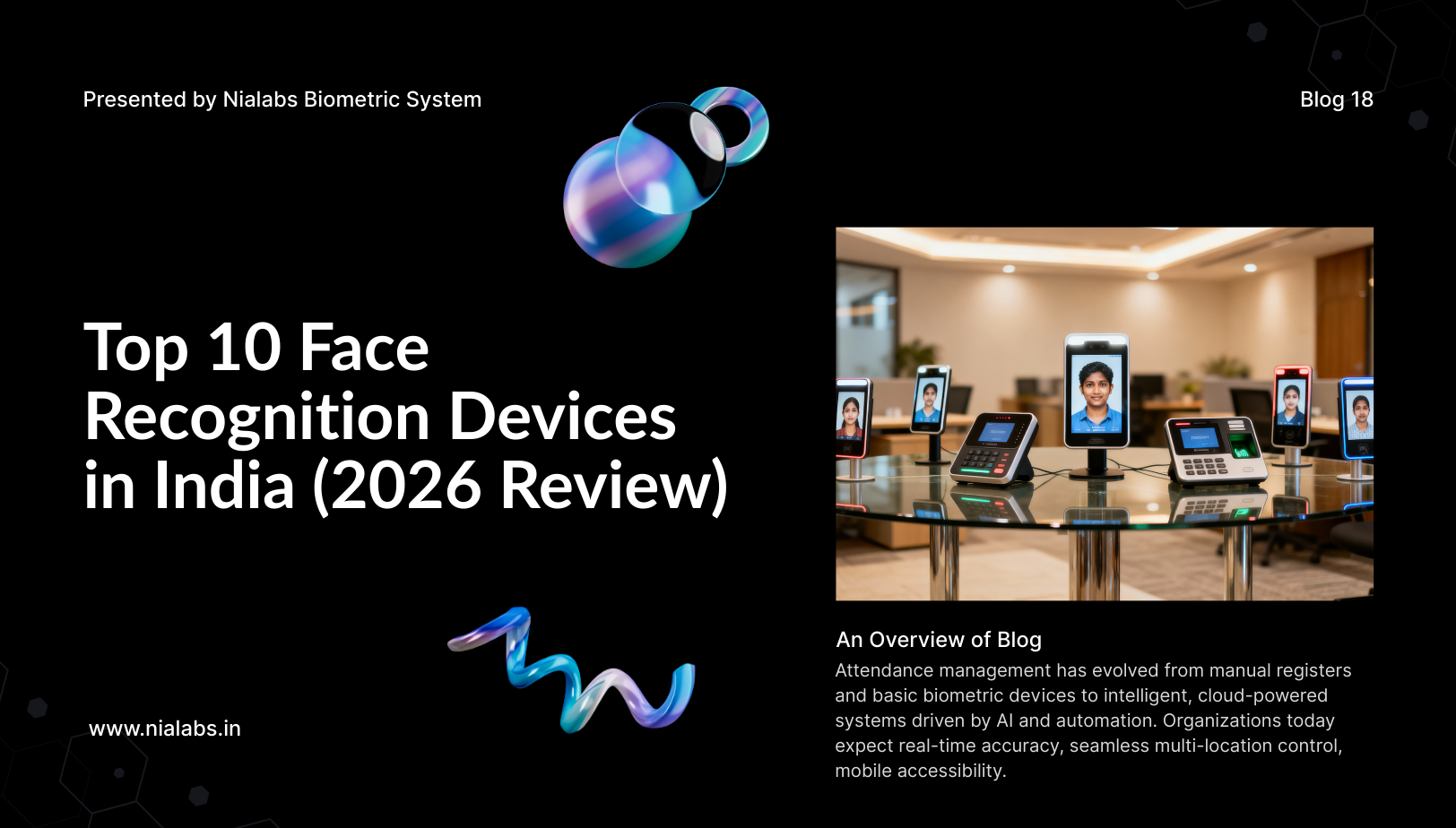
Top 10 Face Recognition Devices in India (2026 Edition)
Face-recognition attendance devices have become extremely popular across schools, offices, and institutions in India. They offer contactless, touch-free attendance, eliminate proxy marking, and deliver fast, accurate, tamper-proof attendance logs - all in real time.
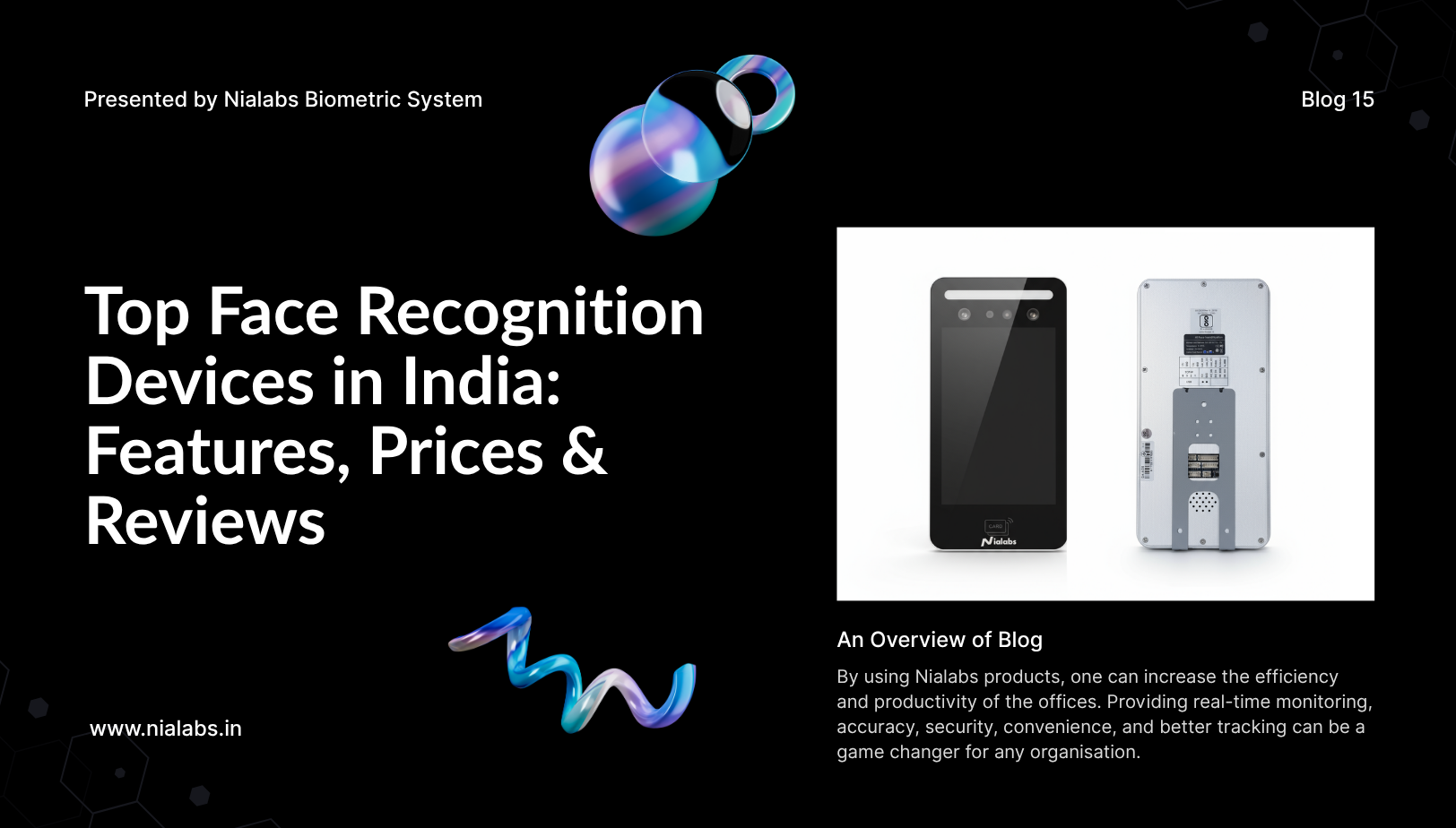
Top Face Recognition Devices in India – Features, Prices & Reviews
Now, with face recognition technology, attendance and access control are simple and intelligent processes. Contactless attendance systems have replaced conventional systems in schools, offices, factories, and hospitals. They are fast, precise, and clean, thus suitable for contemporary work environments.
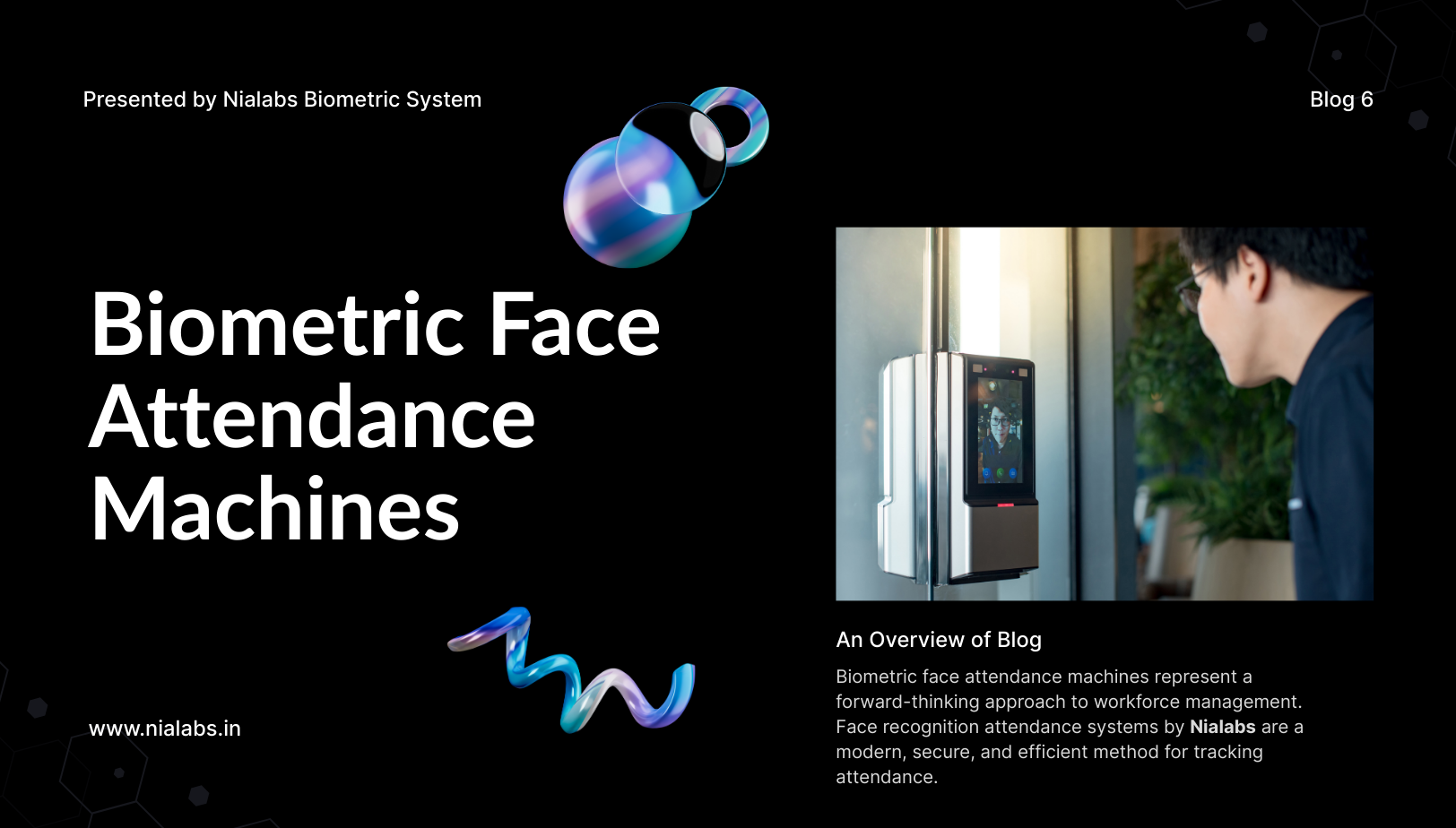
The Role of Face Attendance Machines in Modern Workplaces
Face attendance machines have become a vital part of modern workplaces, offering a secure, contactless, and efficient way to track employee attendance. Using advanced facial recognition technology, these systems eliminate the need for traditional methods like manual registers, ID cards, or fingerprint scanners, reducing time theft and proxy attendance. They enhance workplace productivity, improve accuracy in payroll processing, and support hygiene by minimizing physical contact—an especially important factor in post-pandemic environments. With real-time data tracking, seamless integration with HR software, and high-level security, face attendance machines are transforming how organizations manage workforce attendance in a smarter and more reliable way.