

Blogs
Home
📋 Table of Contents
Biometric Solutions for Attendance, Security & Access Management
29 May, 2026
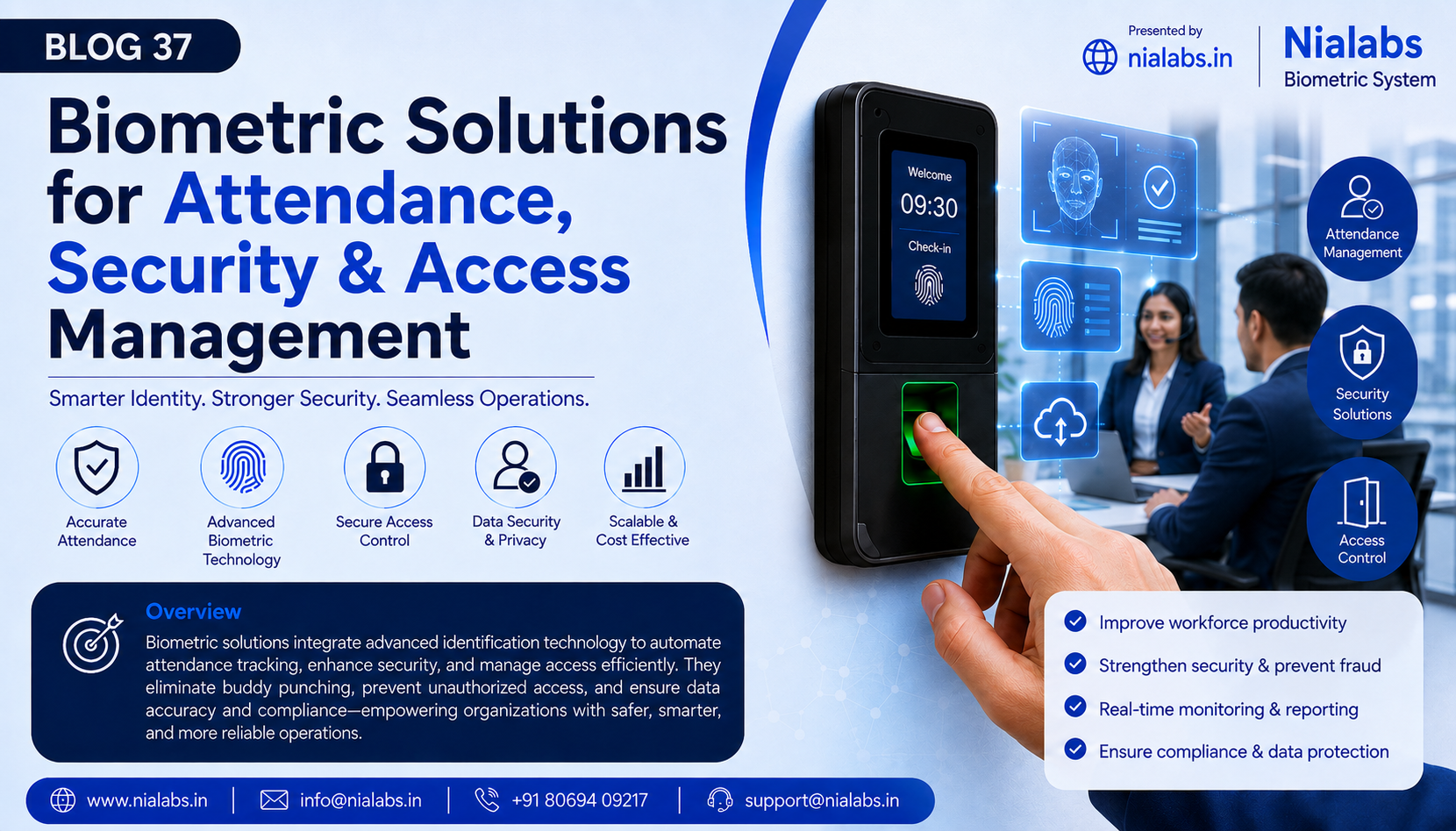
Biometric solutions for schools and offices India enable the automation of time & attendance, physical access control, and the improvement of security for the school, office, and corporate environment, utilizing unique physical or behavioral characteristics such as fingerprint scans, facial recognition, or iris scans to deliver error-free and proxy-free audit-ready data streams in real time.
The Inadequacy of Traditional Methods
In Indian organizations, for decades, attendance and access control systems were managed with the help of registers, ID cards, and manual punch systems. These were low-cost, well-known systems, and easy to bypass or manipulate.
Buddy punching is a costly practice in companies that amounts to thousands of man-hours every year. It exaggerates the number of school students and encourages irresponsibility. Swipe cards are stolen or copied, and registers are changed.
All of this can be addressed by the biometric solution at the source. A fingerprint cannot be copied or passed on, nor can a facial recognition attendance system or an iris, and therefore a fingerprint attendance system India, face, and iris offer a level of confidence of identity that cannot be offered by either a card system or a PIN, and education, manufacturing, health, and government have begun to move toward these measures.
How is the actual ‘Biometric Solution’ defined?
Current biometric platforms come into use in 3 use cases that are ideal when integrated:
-
Attendance Tracking:
Every check-in and check-out is associated with a verified identity, a time stamp, and GPS location data; there are no handwritten registers to change and no false check-ins. Schools benefit from biometric bus boarding systems that identify students boarding a bus and upload the time stamp to parent notification systems. For a shift-based workforce, attendance feeds directly into the biometric payroll integration India, where it flags overtime hours and irregularities.
-
Physical Access Control:
Access cards and PINs are used to authenticate people. Physical access control biometrics, who people are, and authorized individuals can get into server rooms, labs, and restricted offices. Data centres, production floor can be accessed by a verified employee at permissible times in a corporate environment. The biometric access control system, which requires a combination of multiple biometrics (e.g., Fingerprint + Face recognition), has become the standard for critical access points. Log is digitally time-stamped, and the data is tamper-proof.
-
Integration of Safety & monitoring:
Biometric solutions are used with CCTV solutions so that the identification within the surveyed area can be done in real time. Facial recognition can identify unregistered individuals on the perimeter of the facility and raise alerts prior to any threat development. Liveness detection makes it impossible for a photographed image or video to spoof a camera-based scanner, a prerequisite for any competent security implementation.
Major points of evaluation in a biometric platform
-
Multi-modal Recognition:
The use of fingerprint, face, and iris recognition access control for accounting for a user who can't use their fingerprint (due to age, job, skin condition, etc.).
-
Offline mode:
This facility, where data is collected offline and uploaded whenever a connection is made available. This is of particular importance for the schools and the sites situated in the cities of Tier 2 and Tier 3.
-
Integration APIs:
The biometric system should be integrated with Payroll, ERP, HRMS, & School management system without any export functionality.
-
Liveness Detection:
Prevents false identity authentication using images or masks. It is mandatory when deploying facial recognition in sensitive environments.
-
Cloud vs On-premise:
The advantages of cloud deployment are having a single dashboard and being scalable
With on-premises, you will have more control over where the data resides. Although it is not always a choice between the cloud vs on-premise biometric system, hybrid versions can also be implemented for businesses that need both choices.
Data Privacy & Compliance in India
As biometrics, under the DPDP Act 2023, fall into the ‘sensitive data’category, it has stringent privacy requirements.
Prior consent should be obtained before enrollment, and only information relevant to the declared purpose may be collected. Data is stored as an encrypted template, and a reasonable time limit for data retention must be established, in addition to the right of individuals to withdraw their consent or request deletion.
Selecting a system developed with DPDP Act biometric compliance in mind, not as an add-on post-deployment, not only decreases liability risk but also cultivates employee, student, and parental trust.
Operational case for Biometrics
The direct benefits are time and accuracy:
-
Real-time availability of attendance records
-
No manual matching required for payroll computation
-
Each access event will have a full audit trail
-
No time spent by the administration staff logging
The benefit over the longer term is institutional confidence. If the parents trust that their child is present and the attendance has been validated through biometrics, if the employees know that records are immutable, and if the managers know that the access logs are auditable, then the entire organisation has a higher baseline level of accountability.
Conclusion
For Indian schools, offices, and enterprises that still rely on manual systems, the cost of inactivity is calculable: time wasted, errors in data, and security loopholes that will manifest themselves only when there is a breach. A biometric attendance system is the answer to all these in a single integrated platform. The stringent DPDP regulations and the increasing liability will mean that organizations that are investing in biometrics technology now are positioned correctly on an operational, legal, and reputational level.
FAQ
-
In Indian schools and offices, what is the most widely used biometric modality?
Fingerprint scanning is widely used due to the lower hardware costs. Face scanning is increasingly widely used, especially in contactless situations. Iris scanning is used when there are greater accuracy requirements.
-
Does the biometric system work without the internet?
Yes, enterprise-grade devices come with the ability for data to be stored on the device locally and then automatically synchronised to the cloud when connectivity is available. This makes the biometric system ideal for rural schools and tier 2 & 3 locations.
-
What to do if a fingerprint cannot be read?
The multi-modal platforms enroll a secondary identifier (facial recognition as a backup) so no person is barred from the system.
-
What is liveness detection?
The purpose is to confirm that the biometric sample comes from a live individual and not a photograph or a copy. This is particularly important when it comes to preventing spoofing in face recognition deployments.
-
How will the biometric system interface with existing software?
The systems interface with payroll, HRMS, school ERP system, and school management systems through readily available open APIs, so there is no need for any exports or double data entry.
✍️ Muskan Singh
Hi, I'm Muskan Singh, a content writer passionate about exploring how technology, EdTech, and SaaS are shaping the...
Show More📞 Get In Touch
We'd Love to Hear From You!
✍️ Muskan Singh
Hi, I'm Muskan Singh, a content writer passionate about exploring how technology, EdTech, and SaaS are shaping the...
Show More📞 Get In Touch
We'd Love to Hear From You!
Related Blogs
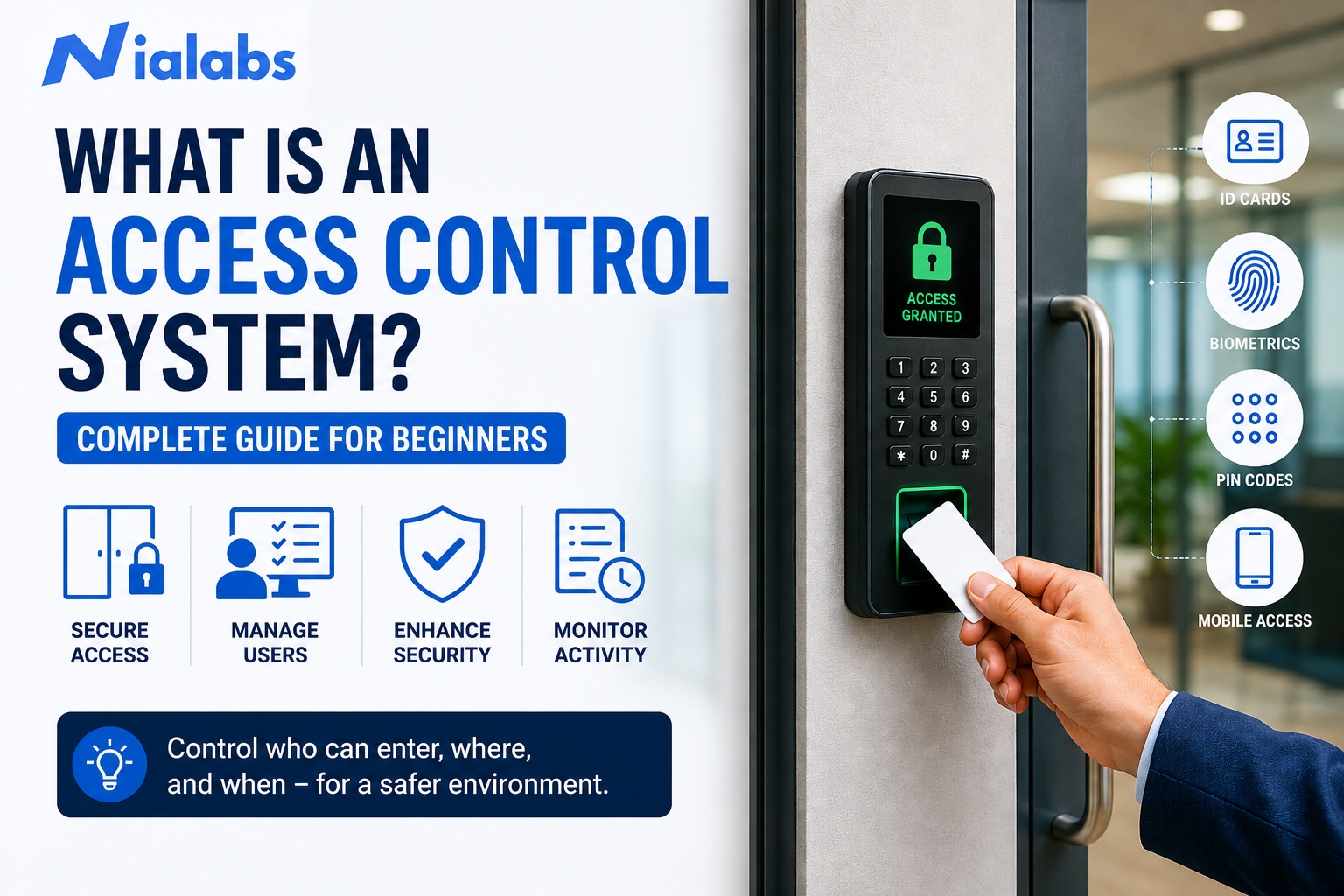
What is an Access Control System? Complete Guide for Beginners
access control systems improve security, attendance tracking, compliance, and facility management. Compare biometric and card-based systems for your business.
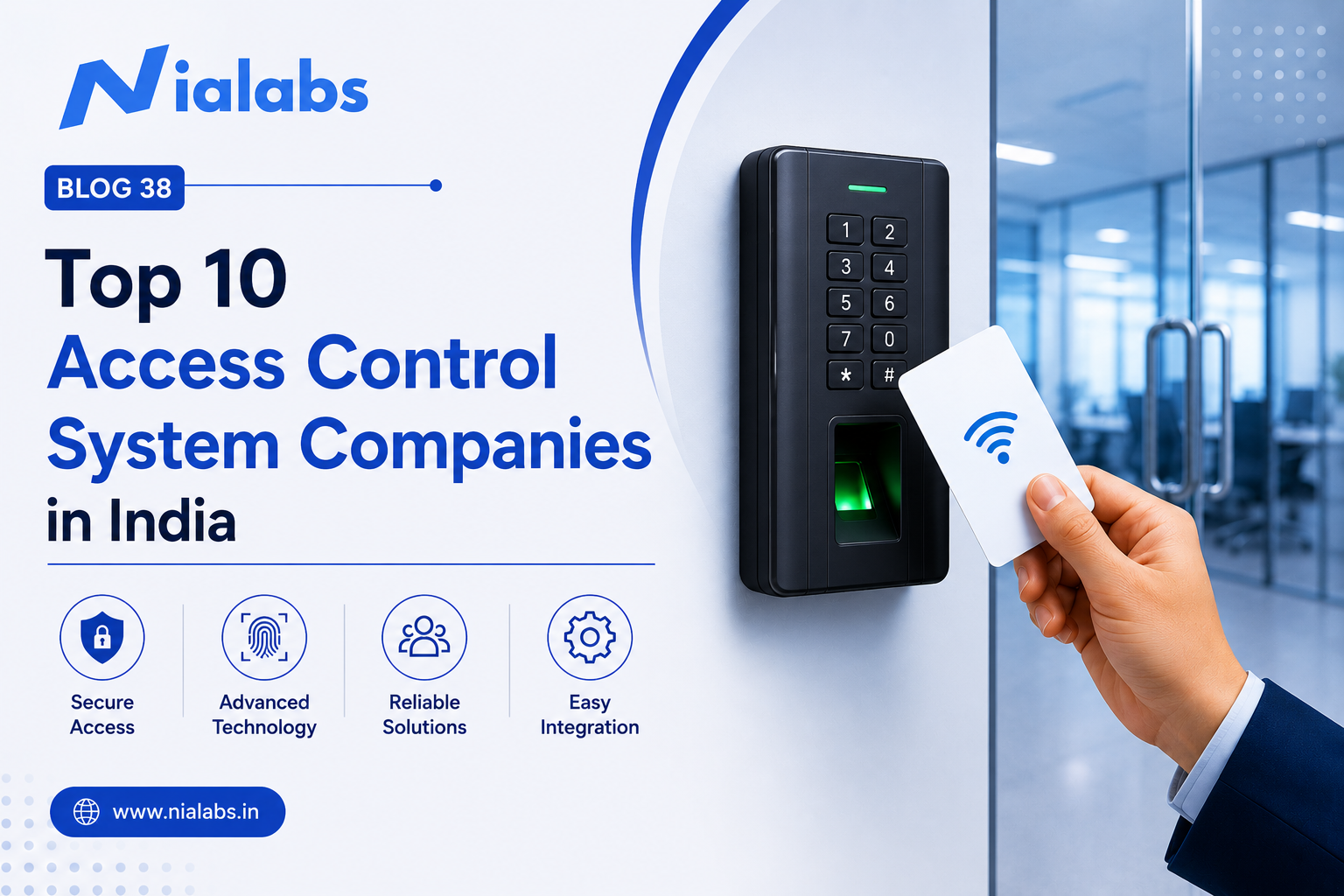
Top 10 Access Control Systems Companies in India
top 10 access control system companies in India offering biometric, RFID, facial recognition, and smart security solutions for businesses.
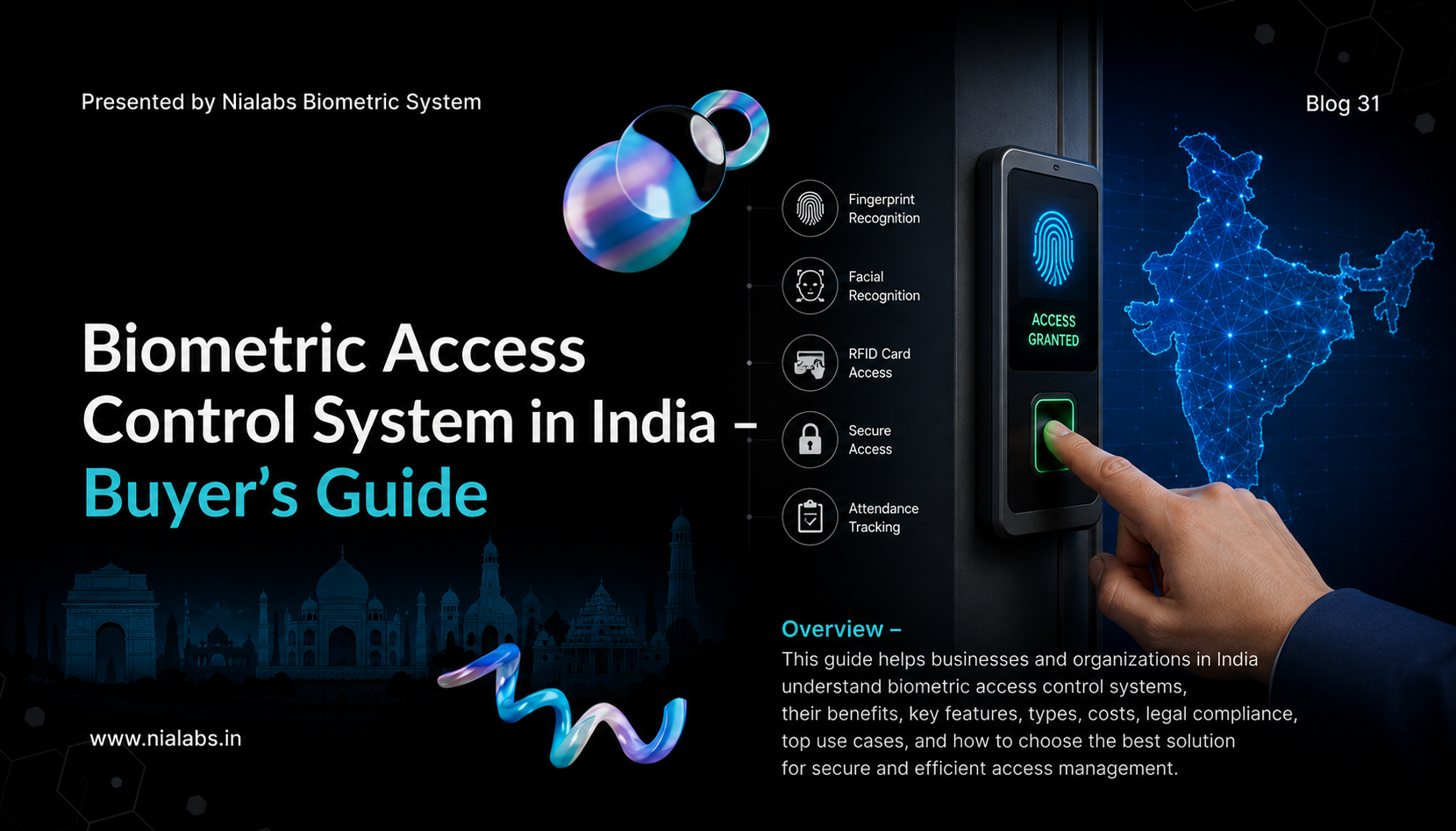
Top Biometric Access Control System in India – Buyer’s Guide
This buyer’s guide explains how biometric access control systems are transforming security and attendance management in India. It covers different authentication technologies such as fingerprint, facial recognition, RFID integration, and mobile-based access, along with key features, pricing factors, compliance considerations, installation tips, and industry-specific use cases to help businesses choose the right secure access solution.