

Blogs
Home
📋 Table of Contents
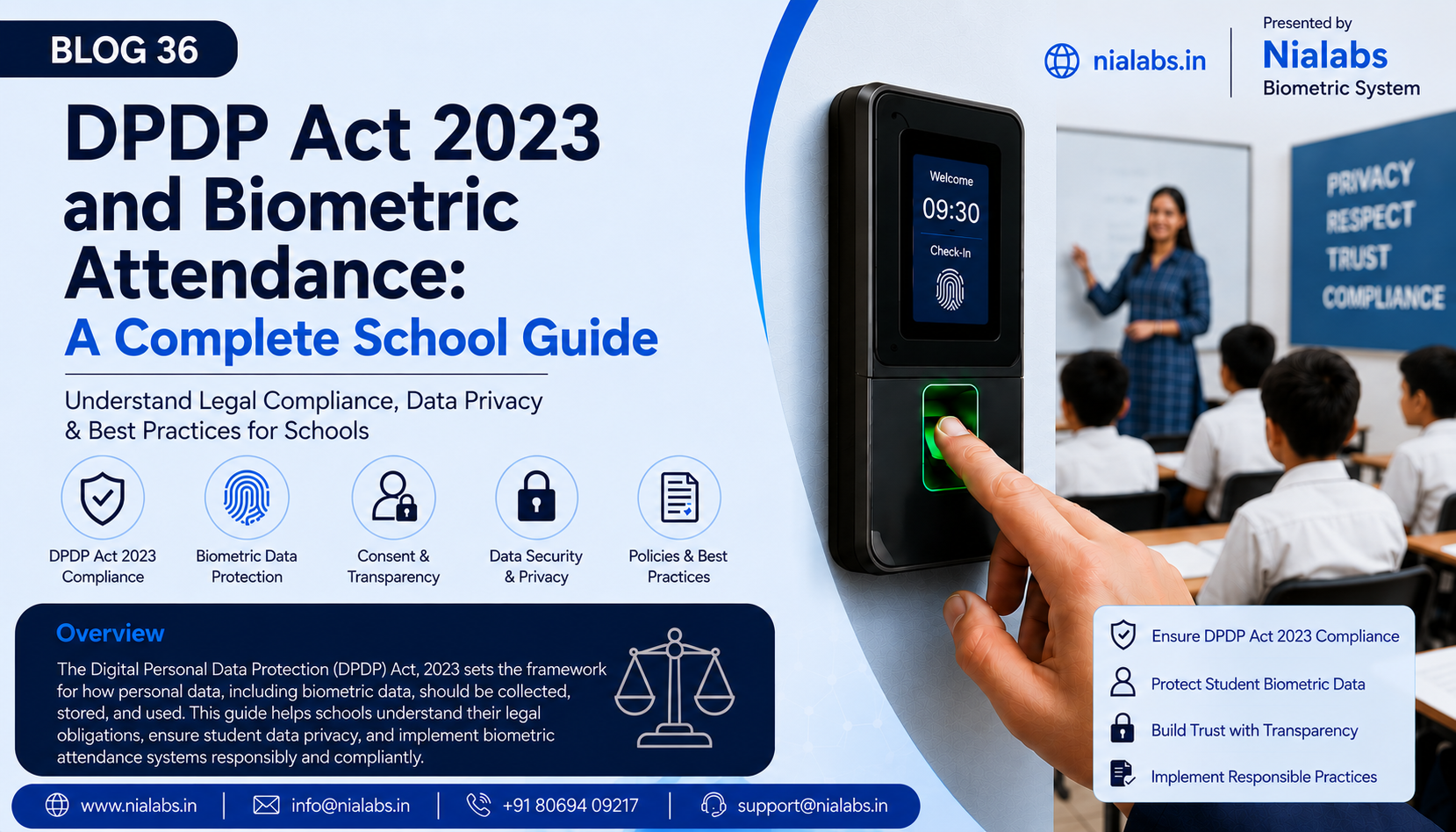
DPDP Act 2023 and Biometric Attendance: A Complete School Guide
25 May, 2026
Biometric attendance systems are widely and quickly implemented in schools across India. Schools are implementing more advanced technology, which is much more sophisticated than smart devices (fingerprint scanners). Face recognition attendance system are other biometric technologies adopted in schools to simplify school administration and to ensure student data safety.
However, apart from easy management and accurate records, the DPDP Act 2023 requires the schools to maintain data privacy and obtain explicit consent.
Biometric information is extremely sensitive, and that of a child is no exception. Password or ID cards are all reversible, and if this information is leaked, it cannot be changed. It is thus important that schools are aware of their legal obligations and how they need to be in compliance with the law.
In this blog, we have covered the implications of the DPDP Act for biometric attendance system in schools and important steps for schools to achieve compliance whilst also leveraging the benefits of modern technology.
What is the DPDP Act 2023?
The first law for student data protection in India laid regulations on the collection, storage, and processing of personal data by entities. It includes the following:
-
Schools have been defined as the Data Fiduciary
-
Students and their parents as the Data Principals
-
Biometric data is an aspect of sensitive personal data
The act can be classified into 3 core principles:
-
Consent in data collection
-
Limiting the purpose
-
Security and accountability for data
The biometric attendance system is now a responsibility for the schools using it, not a luxury.
Why Biometric Attendance Systems are Regulated
The biometric attendance system records specific, unique characteristics from employees:
-
Fingerprint data
-
Facial Identification data
-
Iris scan data
These are highly personal identifiers unique to each individual and, unlike any other attendance systems, establish a digital record directly linked between their identity and actions (absence/presence).
Instead of this biometric information:
-
Cannot be reissued or reset, unlike passwords
-
Prone to abuse in case of a data breach
-
Requires enhanced security measures
Thus, biometric systems have been incorporated within the ambit of the DPDP Act 2023, especially if they are associated with minors such as school children.
DPDP Act & Data of Children- Why the Act is so Important
The Act states that any person below the age of 18 years is a child, making schools high-responsibility data handlers.
Parental Consent Requirement:
Schools will be required to provide clear, demonstrable parental consent before collecting and using students’ biometric data. Parental consent biometric data should be:
-
Clear and knowledgeable
-
Specific in purpose
-
Recorded for auditing purposes
Easy processes should be in place for parents to revoke their consent.
No Profiling/ Intrusive Monitoring
Under the DPDP Act, a child’s data cannot be used for:
-
Behavior profiling
-
Tracking beyond need/ extent
-
Any activity that is harmful to the child
Biometric attendance can be used; access has to be limited only for attendance and safety purposes, and not for tracking.
More Accountability
Educational institutions are anticipated to offer greater protection, as student information could determine long-term privacy and security. Failure to appropriately protect this information is likely to bring closer inspection under the law.
School mandatory compliance:
Schools should take the following measures in compliance with the biometrics attendance system as required by the DPDP Act compliance for schools:
-
Purpose Limitation:
Biometric data privacy should be collected and used for a defined purpose. Thus, attendance records could not be used for analysis, monitoring, or even sold to third parties without proper consent.
-
Data Minimization:
Only collect what you need, for example, instead of retaining fingerprints themselves, a school should only use a stored encrypted version of a fingerprint (which is unable to be reverse-engineered).
-
Data Security:
A strong security network for a school requires the following:
-
End-to-end encryption
-
On-site/cloud secure storage
-
Role-based access controls
-
Regular security audits
-
Consent Management:
Schools should maintain a good system for:
-
Documenting parental consent
-
Modifying parental consent preferences
-
Permitting withdrawal of parental consent
-
Parental consent must be readily available for auditing purposes
-
Retention & Removal of Data
Biometric data should not be kept on file forever. Schools need to have data retention and removal policies in place,e and data should be removed as soon as a student leaves, the school year ends, consent is rescinded, or the equipment is taken out of use.
-
Vendor & Third Party Compliance
When an external biometric solution provider is used, schools must:
-
Comply with DPDP legislation for the vendor
-
Prevent unauthorized data sharing between the vendor and third parties
-
The school is ultimately responsible for the data protection of this biometric data, even when processing is delegated to a third party.
Risk of Non-Compliance
There are considerable risks for the organization on account of not complying with the provisions of the DPDP Act 2023:
-
Fine or Penalties:
There is a penalty to be imposed of up to 250 crore on any data breach, and a considerable penalty for processing the child’s data.
-
Damage to Reputation:
It can result in a lack of parental confidence, thereby having a direct effect on enrollment and the reputation of the institution.
-
Legal Actions:
Failure to comply can attract legal action against the institutions and the partners providing technological solutions.
Best Practices to be Adopted by Schools adopting a Biometric Attendance System
-
Schools must obtain proper, explicit consent from parents before implementing a biometric attendance system in schools.
-
Must follow the principle of data minimization and not store the actual images, but the templates.
-
Effective data security and controls must be implemented, such as encryption and access control system.
-
Transparent to parents regarding the use and policy of the data
-
Keep an alternate means of attendance record for parents unwilling to give consent
-
Should review and update it from time to time, along with the DPDP Act 2023 & other data protection acts.
How Nialabs Helps Schools Stay Compliant
As the technological trends grow every year in the world, schools have a choice to make in implementing technology and in making the people responsible for it.
Our biometrics attendance system features at Nialabs include:
-
World-class encryption
-
Secured data storage system
-
Built-in features for consent management
-
Compliant Indian legal framework
Schools will benefit from automated processes and still adhere to the data protection law India with Nialabs biometric attendance.
Conclusion
Schools employing biometric attendance systems will now discover that privacy is not merely a practice but a duty according to the Digital personal data protection act India. The institutions that make it a practice of being transparent with their consent and school data security measures will be well prepared and will have enhanced trust from the parents. The future will certainly look like ‘smart’ and not just ‘secure’.
FAQ
1. Is biometric attendance lawful in Indian schools?
Yes, provided that schools follow the norms and procedures specified under the DPDP Act 2023 as regards consent, privacy policy, etc.
2. What does parental consent under the DPDP Act mean?
Permission from parents for collecting their ward’s data and using it.
3. What happens if schools do not comply with laws?
Apart from legal actions, fines, penalties, and a lack of trust.
✍️ Muskan Singh
Hi, I'm Muskan Singh, a content writer passionate about exploring how technology, EdTech, and SaaS are shaping the...
Show More📞 Get In Touch
We'd Love to Hear From You!
✍️ Muskan Singh
Hi, I'm Muskan Singh, a content writer passionate about exploring how technology, EdTech, and SaaS are shaping the...
Show More📞 Get In Touch
We'd Love to Hear From You!
Related Blogs
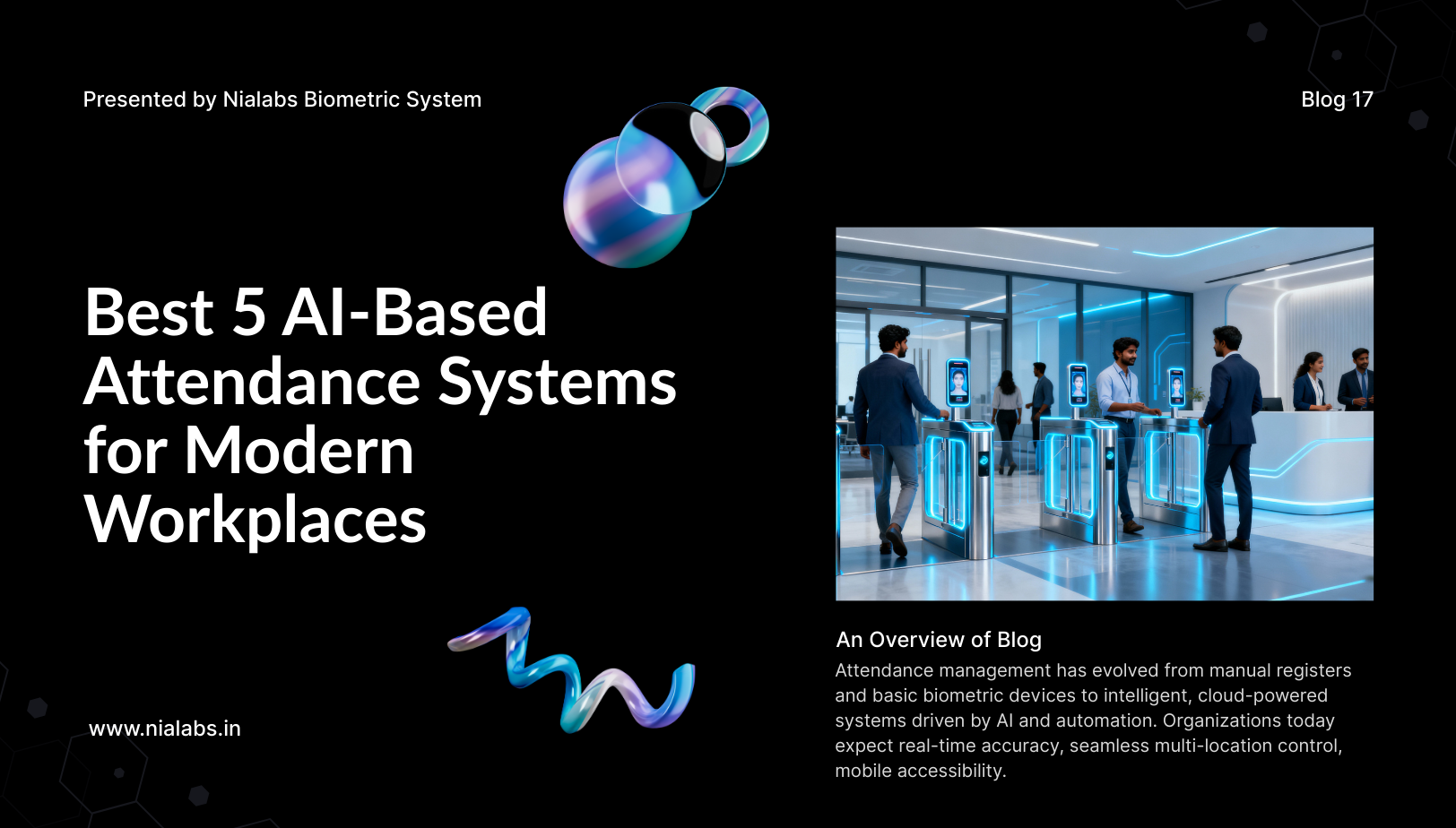
Best 5 AI-Powered Attendance Systems for Modern Workplaces
An AI-powered attendance system uses artificial intelligence and biometric/face recognition (or other biometric methods) to automatically identify employees and mark their attendance—replacing manual registers, swipe cards, or fingerprint scanners.
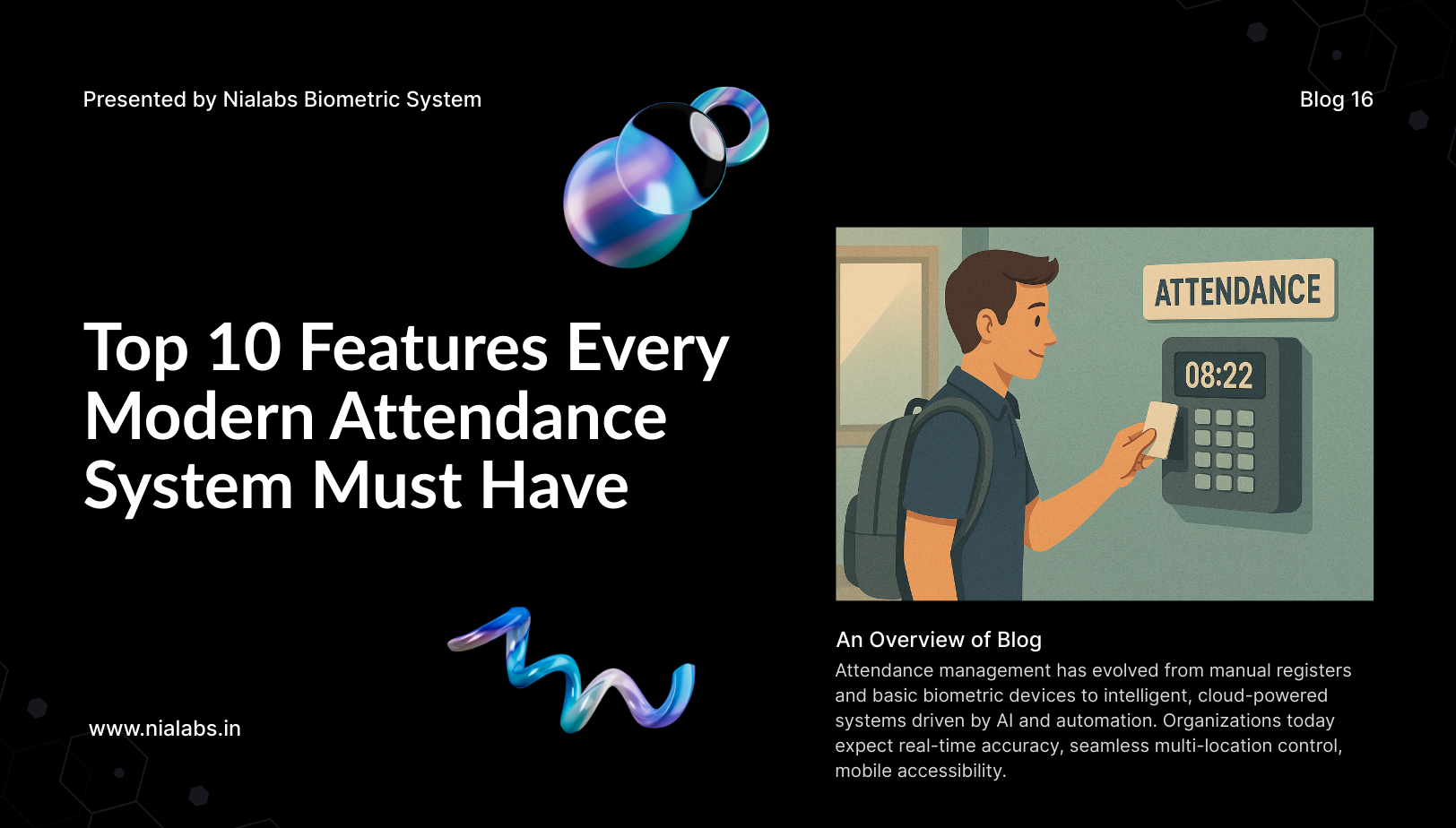
Top 10 Features A Modern Attendance System Should Have
Discover the top 10 features every modern attendance system should offer, including biometric tracking, mobile attendance, real-time reporting, cloud access, and seamless payroll integration.
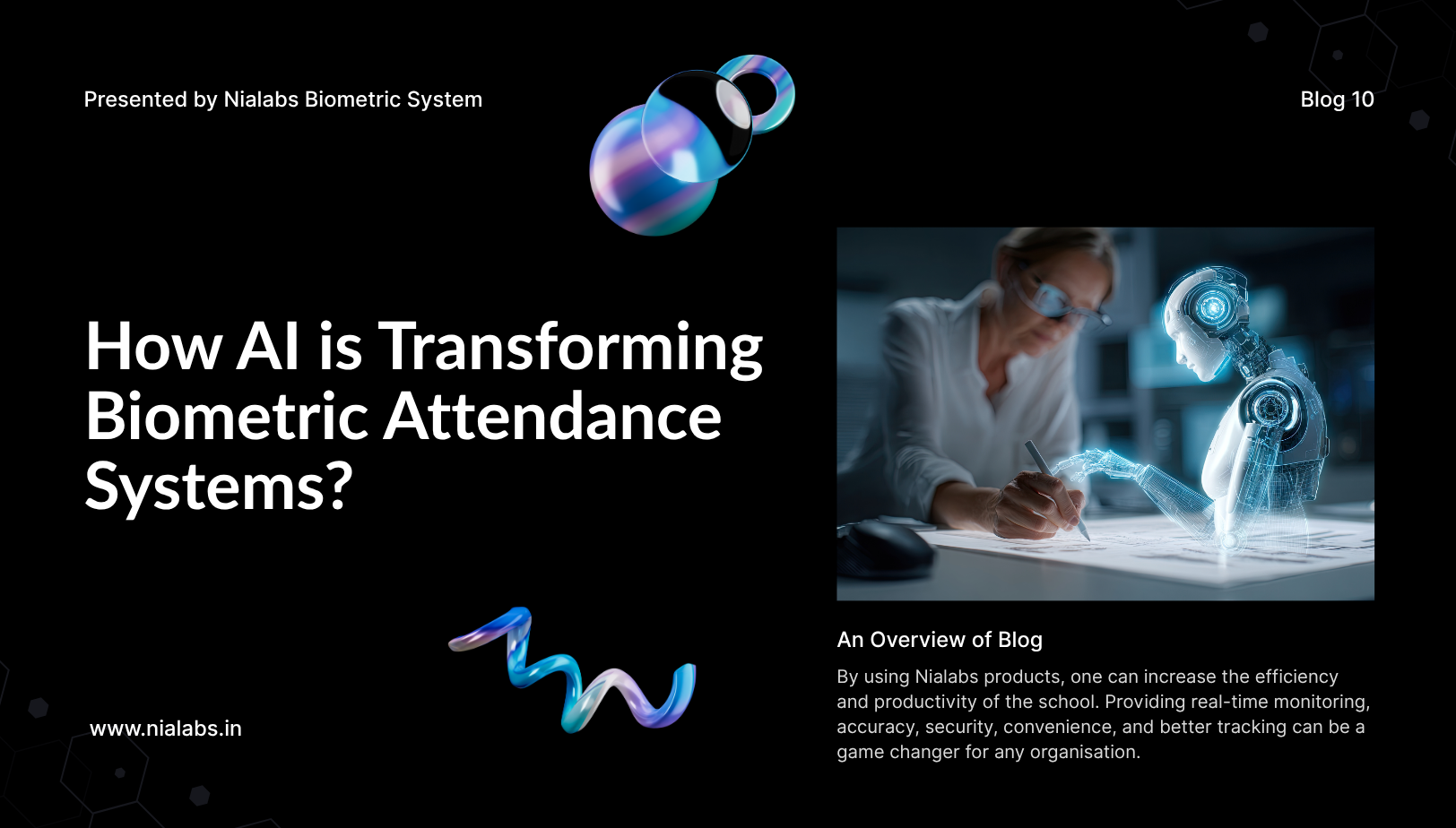
How AI is Transforming the Biometric Attendance System
Artificial Intelligence (AI) is revolutionizing the way biometric attendance systems operate, making them faster, smarter, and more secure than ever before. Traditional biometric systems relied solely on fingerprint or facial recognition to mark attendance. However, with the integration of AI, these systems now offer real-time facial recognition, live detection, predictive analytics, and cloud-based data management, ensuring accuracy and efficiency at every step.