

Blogs
Home
📋 Table of Contents
How AI is Transforming the Biometric Attendance System
06 Nov, 2025
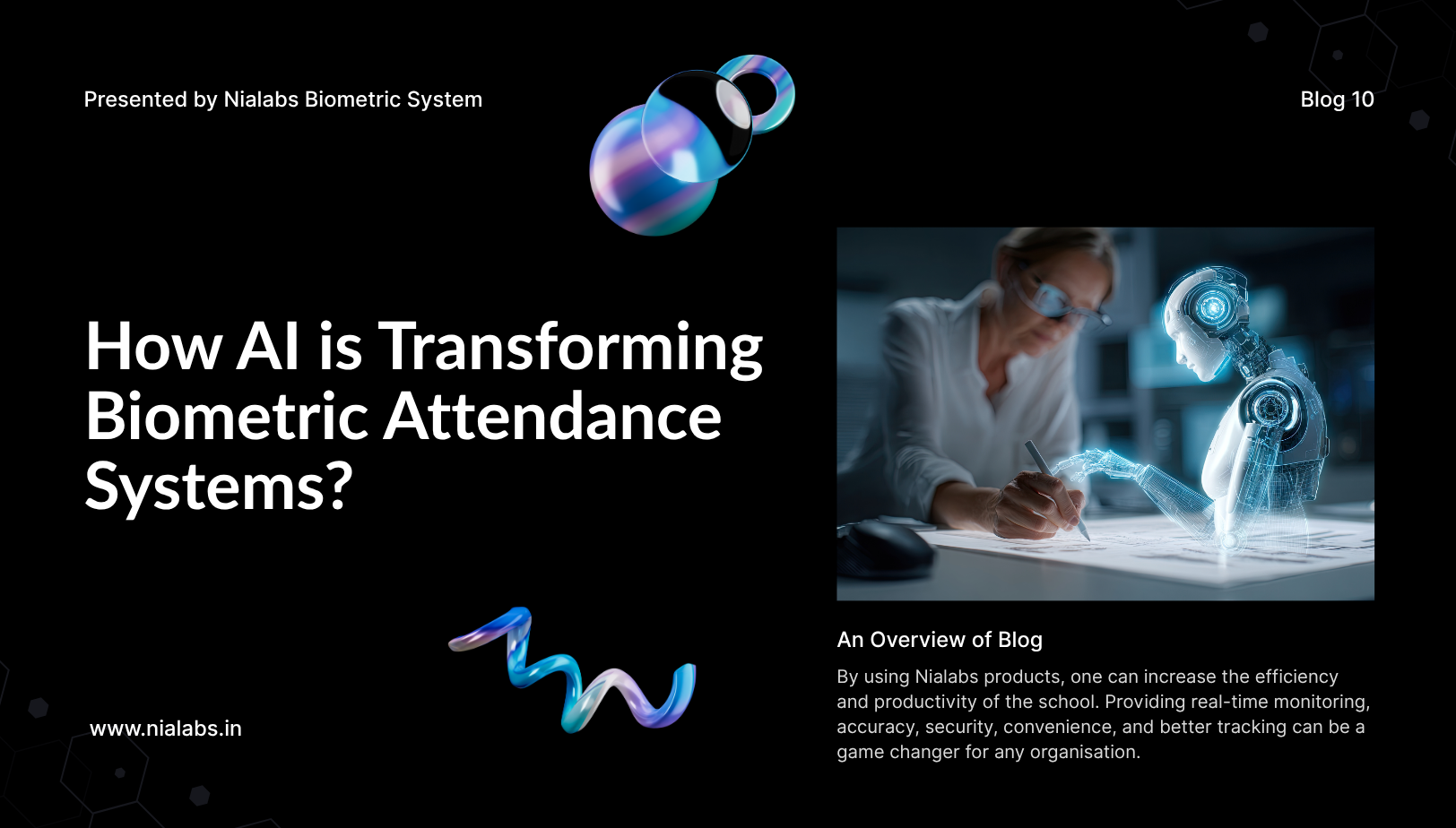
In this technology-oriented era, the word "AI" (Artificial Intelligence) is not from the future—it is the foundation of modern technology. The biometric attendance system is being revolutionized by AI in so many ways that it is becoming known as smart technology that brings enhanced efficiency, precision, and security.
From schools to office buildings, institutions are increasingly relying on AI-enabled biometric technologies not only to track attendance but also to extract insights, catch fraud, and ease management. Here is how the AI incorporation transforms the biometric attendance into a smart and reliable system.
Biometric Attendance System Explained
Biometric-based attendance systems use unique physical or behavioral characteristics of a person, such as a fingerprint, face, or iris, which helps in taking attendance accurately. These systems have replaced the traditional manual registers and card system, thus eradicating errors and time theft. But with the introduction of AI, biometrics have moved beyond just keeping track of attendance—they’re now smart attendance management systems that not only boost security but also make your business more efficient.
How AI is Revolutionizing Biometric Attendance
-
Smarter Facial Recognition:
Facial recognition technology based on AI is more accurate and quicker. Conventional systems had difficulty with poor lightning conditions, camera angles, or minor variations in facial features. AI addresses these problems with machine learning techniques that are trained on new facial data. Therefore, the system can be relied upon even in bad weather.
-
Real-Time Monitoring and Analytics:
Biometric attendance systems do much more than just mark attendance with AI. AI-powered biometric systems are now capable of much more than just taking attendance. Schools and employers have the ability now to monitor attendance patterns, identify anomalies, and even forecast patterns of absenteeism.
-
Improved Security and Fraud Detection:
AI enhances the quality of biometric systems by detecting anomalies. For example, liveness detection allows the system to ascertain if the subject is a live person, a photo, or a video spoof. This makes it more challenging to trick AI-based biometrics, and thus, organizations can confidently provide access and keep genuine records of attendance.
-
Smooth Cloud and IoT Integration:
An intelligent cloud and IoT-enabled biometric attendance system can be deployed at diverse locations and synchronized in real-time. If you operate a multi-campus school or a distributed organization, the AI engine provides seamless coordination and centralized data access from the cloud.
-
Predictive Attendance Insights:
AI records attendance but also predicts attendance. Through historical data and trends analysis, AI can predict attendance trends and suggest a plan of action for the future. Schools, to take just one example, can determine which students are most likely to drop out and intervene to get them back into the classroom.
-
Automated Alerts and Reports:
AI also makes it easier to generate attendance reports, email the parents, and alert the administrators of suspicious activity. This removes the manual labour and at the same time, offers full transparency to the school, parents, and staff.
The Future of AI in Biometrics
The future role of AI in biometric attendance systems is not only promising but also transformational. Here’s what lies ahead:
-
Emotion & Behaviour Detection:
The next generation's AI models will not just recognize faces but will also detect expressions, mood, or level of attention (engagement), providing more profound insights into users' behaviour.
-
Voice & Gesture-Based Authentication:
In addition to fingerprints and facial recognition, future technologies will also utilize voice patterns and hand gestures for effortless verification of identity.
-
Edge AI for offline execution:
Edge computing enables the running of AI models on edge devices without connectivity to the cloud, which accelerates the performance of the system and also enhances privacy.
-
Adaptive Learning models:
AI will keep learning and adapting to the natural changes of faces, fingerprints, or voice tones and maintain the accuracy constantly.
-
Seamless Integration Across Systems:
Biometric systems will become more integrated with ERP, HR, and security solutions, enabling a smart organization’s unified digital ecosystem.
These products and innovations will enable biometric attendance to become more than just a management tool but rather an intelligent system that provides greater operational visibility and user experience.
Why Nialabs Leads the Change
At Nialabs, innovating is our business, and getting smarter is what we do. With the increasing demand for automation, security, and real-time analytics, our AI-based biometric attendance machines fulfill all these requirements.
Nialabs can deliver faster processing, better accuracy, and more scalability for educational institutions, enterprises, or government organizations- by utilizing cutting-edge deep learning models and smart recognition algorithms.
With capabilities such as predictive insights, cloud integration, and data-driven reporting, Nialabs makes attendance monitoring intelligent, secure, and adaptable to the evolving needs of the industry.
Conclusion:
AI has revolutionized biometric attendance systems, making them not just a tool for tracking time but an intelligent and information-centric solution. These systems are now also delivering greater accuracy, prediction, and automation—ultimately leading to more intelligent management and safer environments.
With the ongoing digital transformation, Nialabs AI-powered biometric attendance solutions are emerging as the best solution to depend upon- robust, efficient, and futuristic.
✍️ Muskan Singh
Hi, I'm Muskan Singh, a content writer passionate about exploring how technology, EdTech, and SaaS are shaping the...
Show More📞 Get In Touch
We'd Love to Hear From You!
✍️ Muskan Singh
Hi, I'm Muskan Singh, a content writer passionate about exploring how technology, EdTech, and SaaS are shaping the...
Show More📞 Get In Touch
We'd Love to Hear From You!
Related Blogs
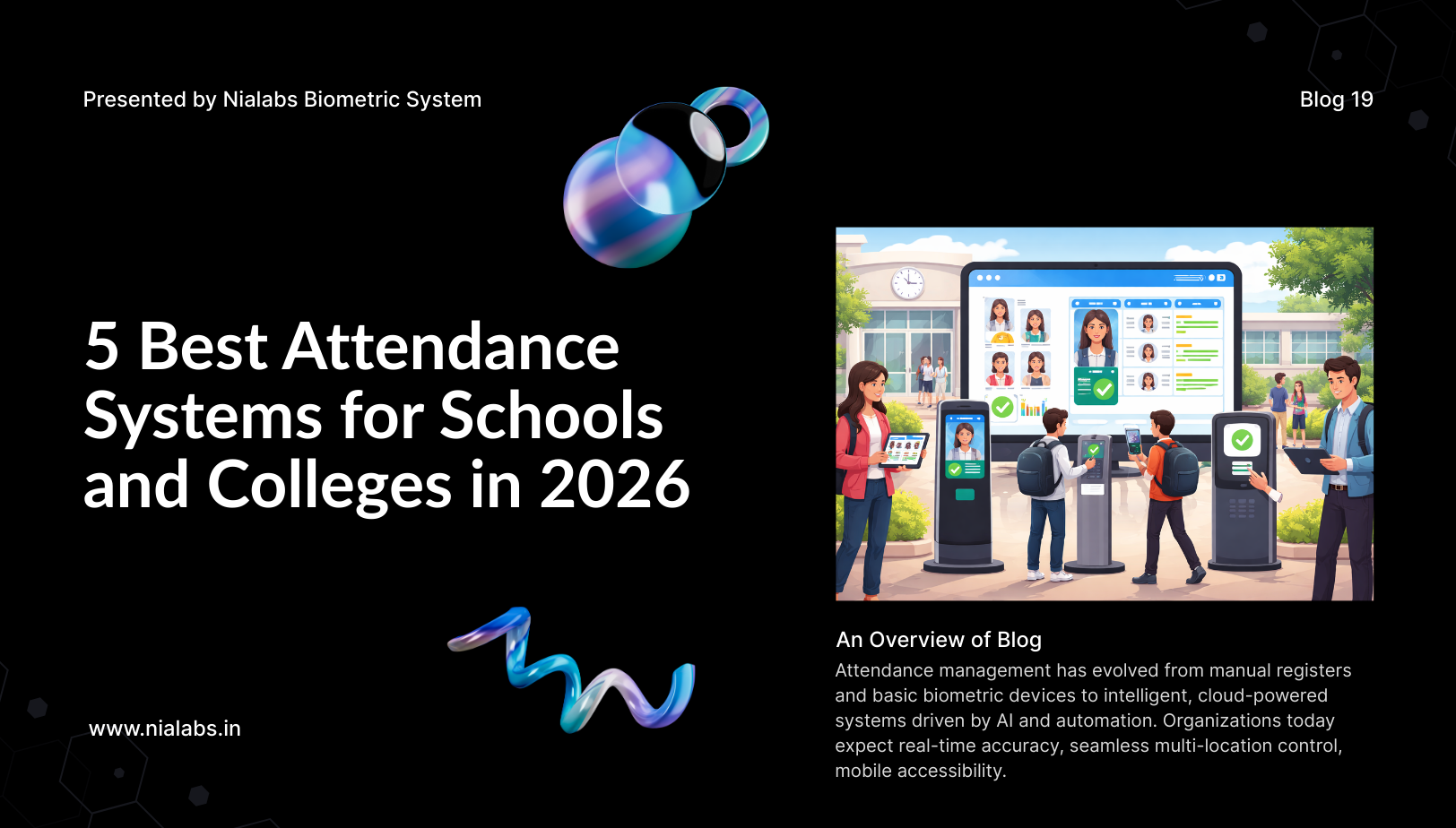
5 Best Attendance Systems for Schools and Colleges in 2026
Attendance monitoring is now mandatory in the school administration system of schools and colleges. Manual ledger, spreadsheet, and simple card systems are no longer sufficient for organisations that need precision, transparency, and real-time access to their information. Education Institutions are expected to continue adopting smart attendance system solutions that ease management, increase discipline/compliance, and enhance communication through 2026.
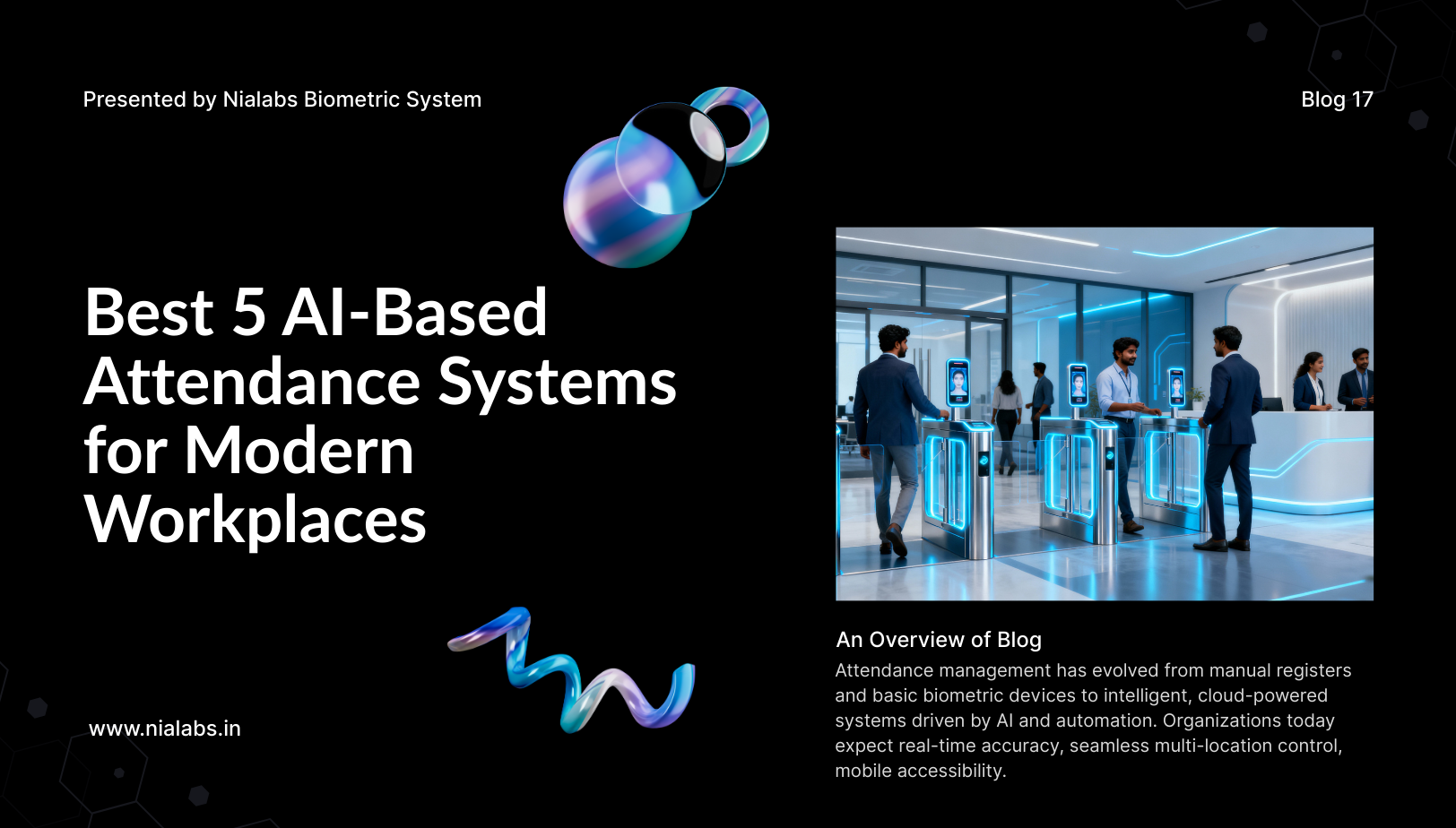
Best 5 AI-Powered Attendance Systems for Modern Workplaces
An AI-powered attendance system uses artificial intelligence and biometric/face recognition (or other biometric methods) to automatically identify employees and mark their attendance—replacing manual registers, swipe cards, or fingerprint scanners.
Top 10 Features A Modern Attendance System Should Have
A modern attendance system must combine accuracy, automation, and convenience. The top features include biometric and face recognition, real-time cloud syncing, mobile app check-ins, GPS tracking, automated reports, integration with HR/ERP software, shift scheduling, AI-based anomaly detection, multi-device compatibility, and strong data security. Together, these features ensure seamless, reliable, and future-ready attendance management.