

Blogs
Home
📋 Table of Contents
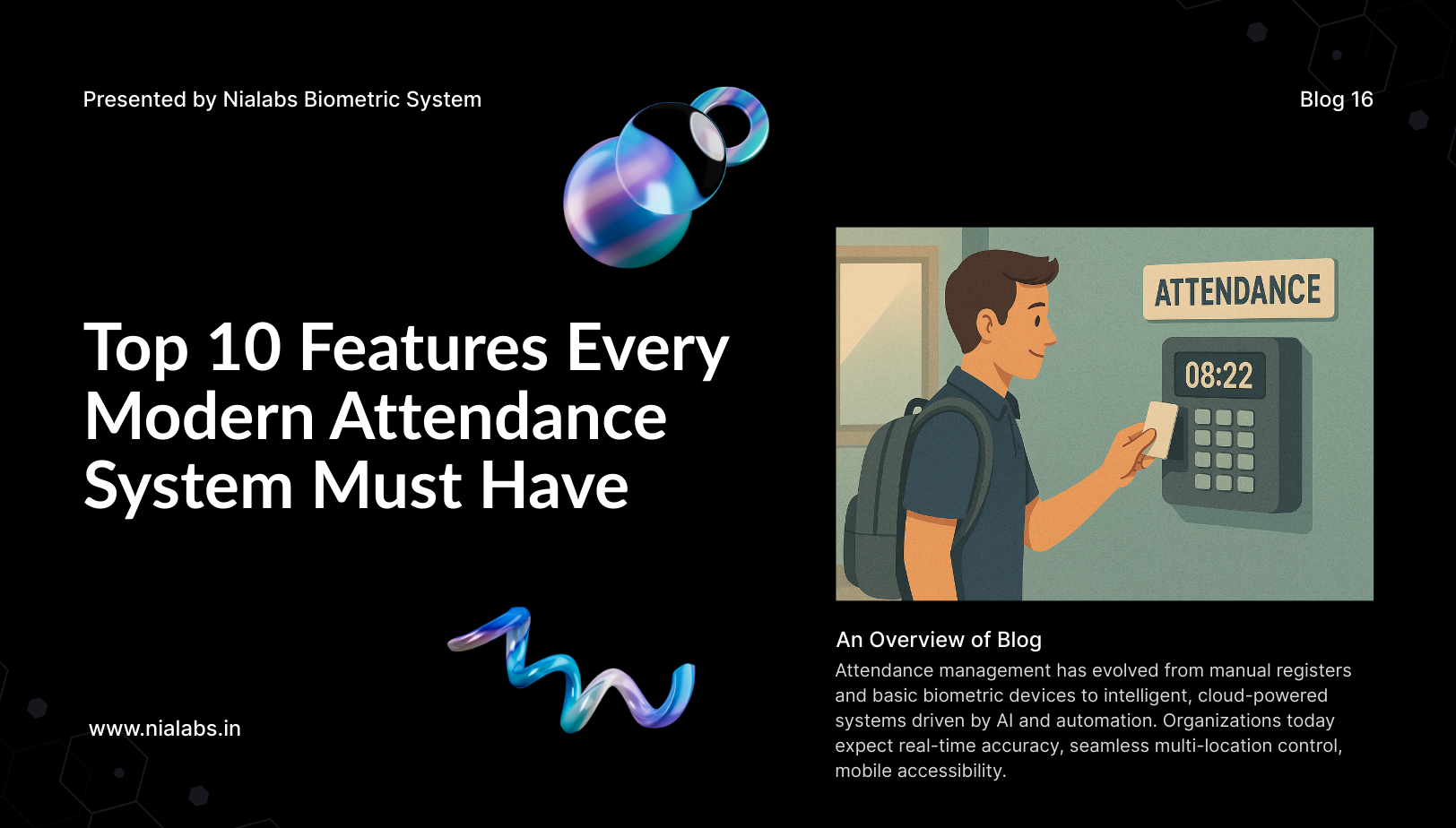
Top 10 Features A Modern Attendance System Should Have
28 Nov, 2025
The monitoring of attendance has largely changed in the last few years. Attendance organizations in every industry - schools, offices, factories, retail chains, hospitals, and distributed teams - now live in a world where manual registers, swipe cards, and standalone biometric attendance system just don't cut it anymore. Expectations have changed with the adoption of cloud computing, AI, and automation. Today's products have to be able to deliver that level of precision, that level of efficiency, and that level of real-time operating visibility.”
As digital transformation is becoming more and more popular, products like Nialabs demonstrate how the attendance system is evolving to meet the expectations of the new office environment. Here are the top 10 features every modern attendance system should have.
1. AI-Based Face Recognition
Face recognition attendance is now considered one of the most accurate means of attendance monitoring. However, it already has advantages over RFID cards or fingerprints, such as being:
-
Completely hands-free
-
Works better in a busy environment
-
More resistant to fraud or ‘buddy punching’
-
Adjusts to Workplace Environments
Today’s devices employ AI and 3D mapping of the face, allowing them to function in various lighting conditions and adapt to obstructions like masks or sunglasses. Nialabs, for example, employs such algorithms to enhance identification precision. This ensures a smooth entry and reduces queuing in crowded areas.
2. Real-Time Cloud Sync
Instant synchronization is now a core requirement. The attendance management system should be enabled to push the log data to the cloud in real time to allow the administrators to:
-
Monitor live check-ins and check-outs
-
Track absentees or latecomers
-
Receive instant multi-team coordination
Real-time attendance tracking gives users confidence that there are no mismatches between devices and dashboards and that the data is current at all times. So HR can respond to staffing needs, unanticipated absences, or compliance matters as they arise.
3. Reports & Analytics Automated:
Automation is one of the greatest evolutions in attendance management. Instead of collecting data manually, one should be able to receive:
-
Daily and Weekly attendance summaries
-
Early out and late in patterns of working employees
-
Reports of absenteeism
-
Overtime calculations
-
Month-end payroll reports
This helps organizations track patterns in behaviour, make staffing decisions, and determine where there are schedule compliance gaps. Attendance reports and analytics allow decisions to be made based on data, rather than assumptions.
4. Multi-Site Support:
Numerous companies and enterprises operate in more than one place. Treating each site as a distinct entity can lead to inconsistent data and replicated effort. A modern system should provide the following:
-
Single dashboard for all branches
-
Reporting is in the same format
-
Common user database
-
Multi-location attendance management
This is particularly helpful for those with multiple locations, such as corporate offices, school groups, retail chains, and manufacturing corporations. A single source provides visibility and uniformity under one roof.
5. Easy Interface with Payroll, HRMS, and ERP
Attendance is essential to make the correct payroll attendance integration. A flaw in the attendance records affects pay calculations. So nowadays system should be capable of integrating with:
-
HRMS platforms
-
Payroll software
-
ERP tools
-
Third-party workforce management applications
Solutions such as Nialabs offer API-based integrations that allow data to flow directly into payroll or HR systems without the need for manual input. It reduces mistakes and administrators’ time.
6. Mobile Application for Admins & Users:
With most teams working in hybrid, distributed, or flexible models, mobile access is now a must. A mobile attendance app should enable the following:
-
Users to do their daily logs
-
Admins can monitor attendance from a distance
-
Lateness and absenteeism notifications
-
Requesting time off and getting it approved has become hassle-free.
A mobile-optimized interface fosters communication and lets you keep everyone in the loop; no desktop monitor is required.
7. Working on Shift, Roster, and Overtime Management Flexibly:
Most of the workplaces today do not have fixed working hours. The entities may have:
-
Rotational shifts
-
Night or weekend shifts
-
Hybrid models
-
Part-time schedules
-
Overtime requirements
A modern attendance system nowadays should also provide for easy shift and roster management and assigning it to a person or a group. Attendance, working hours, and overtime are automatically calculated, which saves labour and increases accuracy.
8. Strong Security for Data and Access:
Attendance systems contain sensitive data—identity information, work schedules, and logs of movement within the facility.
As attention to data privacy grows, the systems need to adhere to stringent security policies, including:
-
Encrypted storage
-
Security cloud architecture
-
Regular backups
-
Role-based access
-
Adherence to data protection laws and regulations
It also restricts what the attendee can see and do with their attendance record to prevent them from damaging the system.
9. Offline Processing:
In most environments, wifi is not reliable enough—be it construction sites, factories, warehouses, or rural areas. Today’s attendance system should include:
-
Mark attendance without the internet
-
Logs are stored securely
-
Auto-sync upon connection availability
The attendance information cannot be lost in offline mode, and it enables you to keep taking attendance even in case of network trouble.
10. Friendly Interface & Simple Installation:
The best technology has to be simple. Good attendance systems should provide:
-
A clean and intuitive dashboard
-
Simple onboarding for new members
-
Fast installation
-
Low maintenance requirements
Simple to use leads to a higher adoption rate and lower technical support dependency.
Why are these features needed today?
Today’s systems need to reduce manual processes and provide transparency to meet the needs of modern work environments. Features like AI recognition, shift management, cloud visibility, offline support, and security have become must-haves—they affect productivity, payroll accuracy, and labour planning.
Nialabs is an example of how modern attendance system designs are evolving, leveraging smart hardware with a cloud-based attendance system. However, the above features are more like a general checklist and applicable to any attendance system, be it the manufacturer.
Conclusion:
The attendance systems being utilized should be automated, accurate, and simple to use. These are the 10 suggested features that a solution must have - from AI recognition to mobile access and strong security - a simple checklist to keep in mind. Solutions like Nialabs attendance system show how such solution capabilities can be brought together in a simple, effective solution. Selecting a platform that offers these essentials will allow organizations to save time, reduce errors, and maintain a transparent record of attendance.
✍️ Muskan Singh
Hi, I'm Muskan Singh, a content writer passionate about exploring how technology, EdTech, and SaaS are shaping the...
Show More📞 Get In Touch
We'd Love to Hear From You!
✍️ Muskan Singh
Hi, I'm Muskan Singh, a content writer passionate about exploring how technology, EdTech, and SaaS are shaping the...
Show More📞 Get In Touch
We'd Love to Hear From You!
Related Blogs
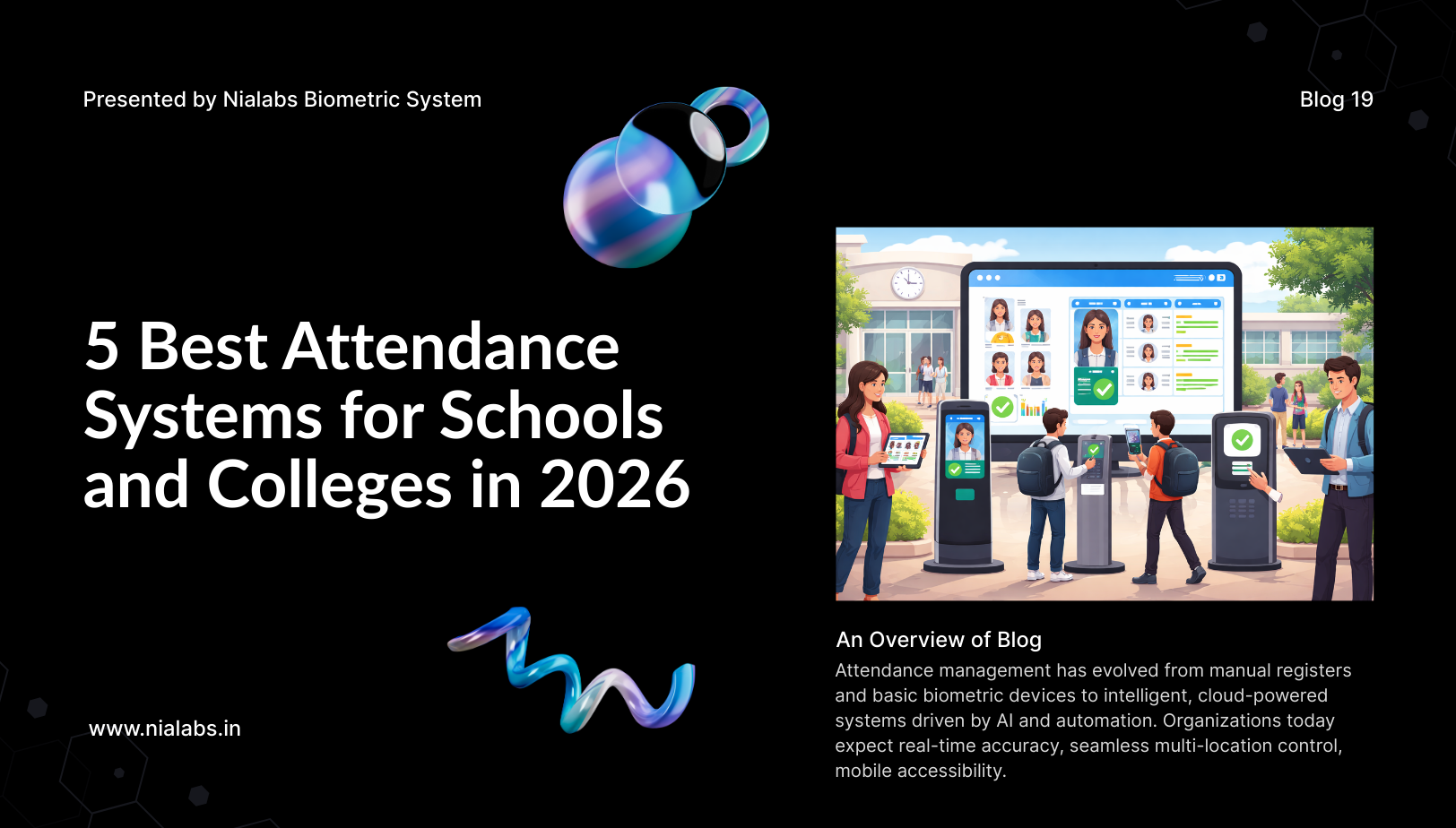
5 Best Attendance Systems for Schools and Colleges in 2026
Attendance monitoring is now mandatory in the school administration system of schools and colleges. Manual ledger, spreadsheet, and simple card systems are no longer sufficient for organisations that need precision, transparency, and real-time access to their information. Education Institutions are expected to continue adopting smart attendance system solutions that ease management, increase discipline/compliance, and enhance communication through 2026.
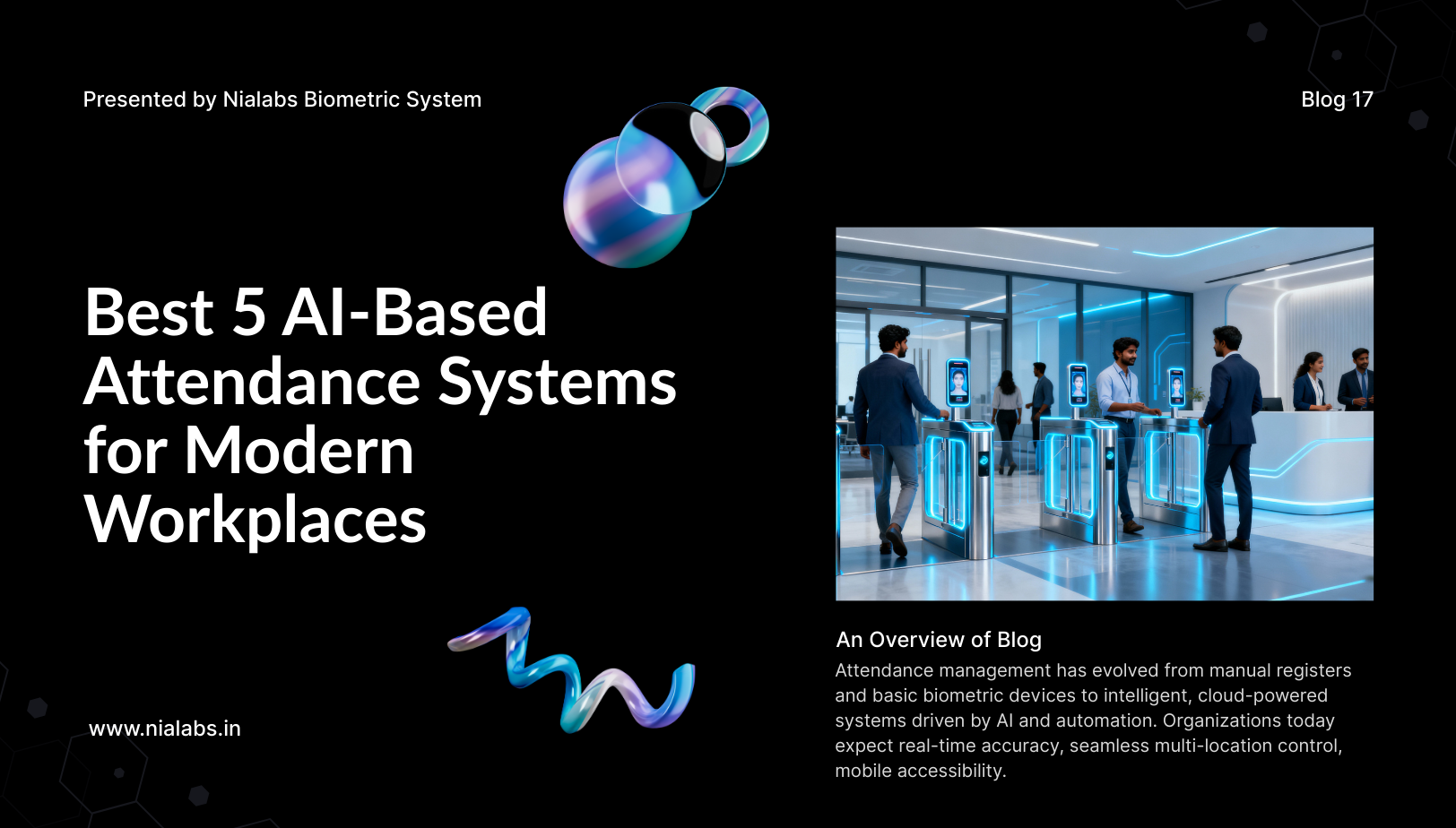
Best 5 AI-Powered Attendance Systems for Modern Workplaces
An AI-powered attendance system uses artificial intelligence and biometric/face recognition (or other biometric methods) to automatically identify employees and mark their attendance—replacing manual registers, swipe cards, or fingerprint scanners.
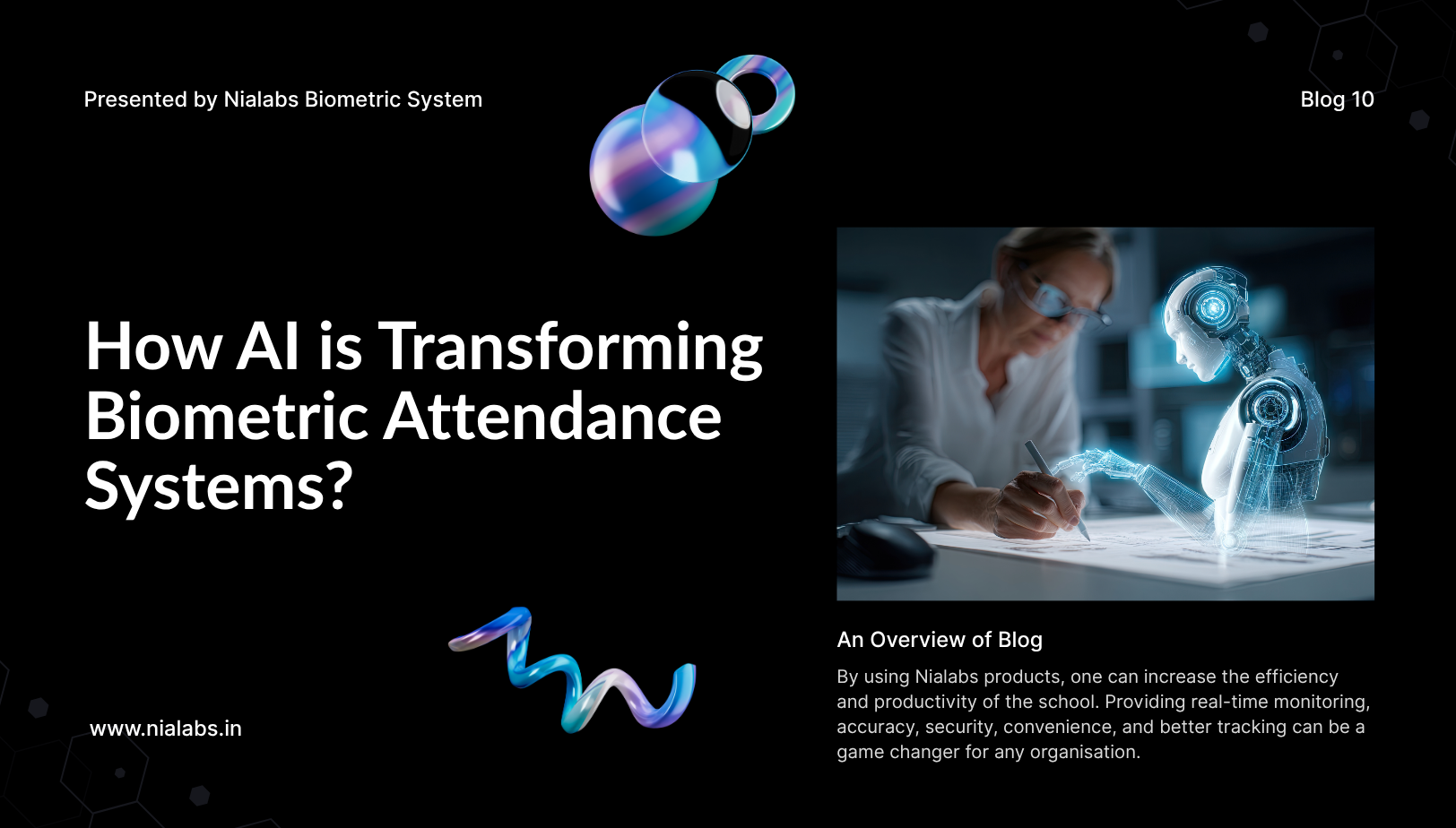
How AI is Transforming the Biometric Attendance System
Artificial Intelligence (AI) is revolutionizing the way biometric attendance systems operate, making them faster, smarter, and more secure than ever before. Traditional biometric systems relied solely on fingerprint or facial recognition to mark attendance. However, with the integration of AI, these systems now offer real-time facial recognition, live detection, predictive analytics, and cloud-based data management, ensuring accuracy and efficiency at every step.