

Blogs
Home
📋 Table of Contents
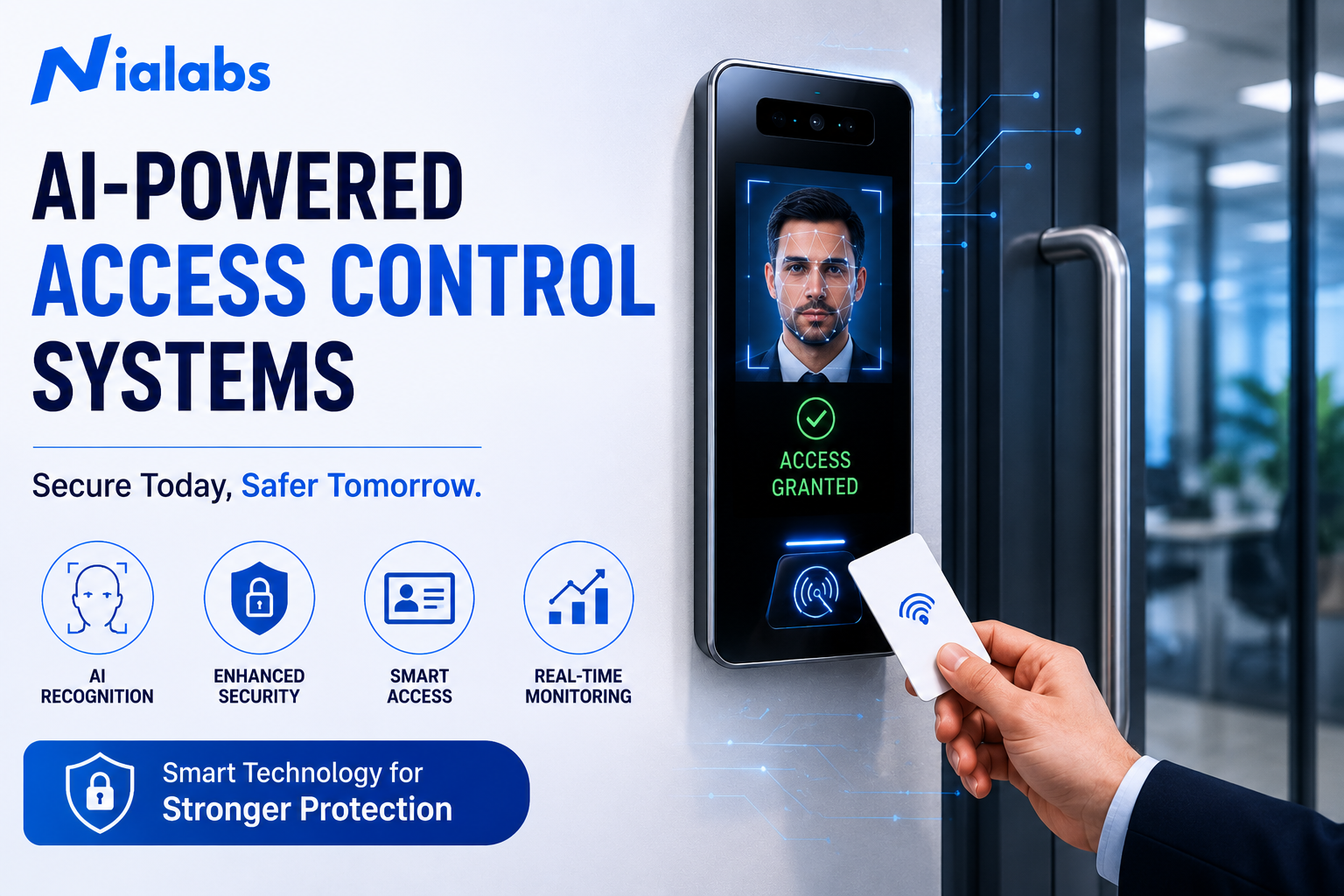
AI- Powered Access Control Systems: The Future of Security
15 Jun, 2026
AI- Powered Access Control Systems: The Future of Security
Historically, security has always been a reactive function. A breach occurs, a protocol is upgraded, and the business moves forward until the next incident. Access control system has always functioned in the same way-identity cards are distributed, PINs are communicated, and access logs are analyzed after the event. At a time when threats, both physical and digital, are multiplying at an accelerating pace, this can no longer work.
The scenario entirely changes when it comes to AI- powered access control systems. It takes the security sector from a reactive one to a predictive, manual to automatic, and segmented to integrated. For the Indian enterprises currently struggling with the growing security needs coupled with regulations such as the DPDP Act 2023, it can be termed not just an update but a necessity.
What is an AI-Powered Access Control System?
AI access control systems employ machine learning, computer vision, and behavior analysis, which are components of artificial intelligence, to provide control and prevent physical entry.
Where old systems use credentials alone (a PIN, card, or simple fingerprint swipe), the AI-powered security management identifies patterns, anomaly detection, real-time decision making, and ‘who’ as opposed to whether this is a real person, based on factors such as the time of day, location, past frequency, and user behaviour.
Core Capabilities
Facial recognition and liveness detection
In advanced current-day AI access control, facial recognition access control will not only compare the visitor's face with its database templates but also determine if it is a real living person standing in front of the machine and not someone faking it with a photo or a mask. All such identification processes finish within one second, making it practical for such high-traffic environments as offices, factories, and organizations.
Behavioural Analytics and Anomaly Detection
The AI system forms behavioral profiles over time, where the attempt of an employee to log in at 2 AM, when he would normally work until 9 AM, generates a flag or block automatically. This kind of awareness of changes of profile would not be possible through a card or PIN, with no awareness of changes. Anomalies also include tailgate events and repeated failed attempts.
RBAC with dynamic permissions
Problems arising from a static permission structure are overcome with AI-driven Role-based access control. Organizations are now able to establish precise, timed, and geolocated permission rights, which are reevaluated dynamically as role transitions occur, highly beneficial for organizations managing vast workforce numbers within IT, logistics, manufacturing, and the health industry.
CCTV and Video Analytics Integration
Using AI access control in a CCTV integrated access control can also help trace the path of an individual and identify crowds approaching a restricted area, while also helping in correlation studies. When access control is not combined with surveillance, there remain ‘blind spots’ which a CCTV-based access control system can avoid.
Where Traditional Systems Fail
Sharing of credentials
The most prevalent vulnerability in today’s workplace, PINs and cards are routinely shared between users.
No contextual awareness
A lost card provides the cardholder with complete access control , instantly and without friction.
Manual Reviews
The introduction of human error to security procedures. The separate nature of access logs and cameras leads to slow, incomplete incident reviews.
For companies with multiple offices and heavy regulatory requirements, the security risks here are quite tangible and problematic.
DPDP Act 2023 Compliance
Under the Digital Personal Data Protection Act 2023 (India), all organizations are subject to mandatory requirements regarding the collection and processing of biometric data. Biometric data collected through any access control using fingerprint or facial scan technologies falls under this regulation.
Compliant-ready systems handle this using on-premises processing of data, through managing the process flows for consent, and audit logs are maintained for auditability. With legacy non-compliant systems, the company can be exposed to the regulations with enforcement coming in.
Nialabs: End-to-end AI access control to Indian Businesses
Nialabs offers an AI-enabled access control solution, which is a fully integrated end-to-end hardware-software solution, unlike most software providers who rely on third-party hardware.
The critical features are anti-spoofing (liveness detection), RBAC to manage permissions, interfacing with CCTV systems, multi-site centralization control, DPDP Act 2023 compatible architecture, suitable for deployment in corporate campuses, industrial plants, hospitals, and in multi-branch organizations.
Conclusion
AI-based access control is longer; it’s an imperative for any enterprise with large facilities, remote staff, and compliance pressures. The gulf between the old and new, driven by AI, is already too vast to manage with systems built in the past. Nialabs access control system provides a mature, India-suited and easily implemented solution to help enterprises achieve this transformation without a large integration overhead.
FAQ
-
What is AI-enabled access control?
A security system, which makes the decisions of the physical access of an individual or an entity based on AI security solutions, including face recognition, behavioral analytics, etc. Rather than only focusing on credentials, it understands context and identifies anomalies, both in real-time.
-
What are the discrepancies with a traditional biometric system?
Traditional biometric access control systems compare fingerprints or faces with a registered record. AI access control studies behavioral traits, detects spoofing and anomalies, both in real-time.
-
Is it appropriate for SMEs?
Yes, configuration is scalable, meaning that a 50-person company uses the same technology base as a global corporation. Suppliers like Nialabs offer modular hardware and alternative solutions that are scalable to business size.
-
How does this satisfy DPDP Act 2023?
Biometrics can be stored on-premise, along with the consent record and a record of legal processing activity with an audit log, according to DPDP Act 2023.
-
What if a legitimate employee cannot be identified?
A backup system, such as the input of the PIN number or placing the card onto the sensor, will be activated when the percentage of confidence is lower than the given figure, to ensure business can be carried out smoothly, without compromising security.
-
Is AI access control suitable for multi-site operations?
Yes, with cloud-based access control systems security teams are able to monitor and control access at all locations from one interface. This system is perfectly suited for companies with more than one operating location.
✍️ Muskan Singh
Hi, I'm Muskan Singh, a content writer passionate about exploring how technology, EdTech, and SaaS are shaping the...
Show More📞 Get In Touch
We'd Love to Hear From You!
✍️ Muskan Singh
Hi, I'm Muskan Singh, a content writer passionate about exploring how technology, EdTech, and SaaS are shaping the...
Show More📞 Get In Touch
We'd Love to Hear From You!
Related Blogs
Top 10 Access Control Systems Companies in India
top 10 access control system companies in India offering biometric, RFID, facial recognition, and smart security solutions for businesses.
Biometric Solutions for Attendance, Security & Access Management
Discover reliable biometric solutions for attendance management, access control, and workplace security with fast, secure, and accurate authentication.
Top Biometric Access Control System in India – Buyer’s Guide
This buyer’s guide explains how biometric access control systems are transforming security and attendance management in India. It covers different authentication technologies such as fingerprint, facial recognition, RFID integration, and mobile-based access, along with key features, pricing factors, compliance considerations, installation tips, and industry-specific use cases to help businesses choose the right secure access solution.