

Blogs
Home
📋 Table of Contents
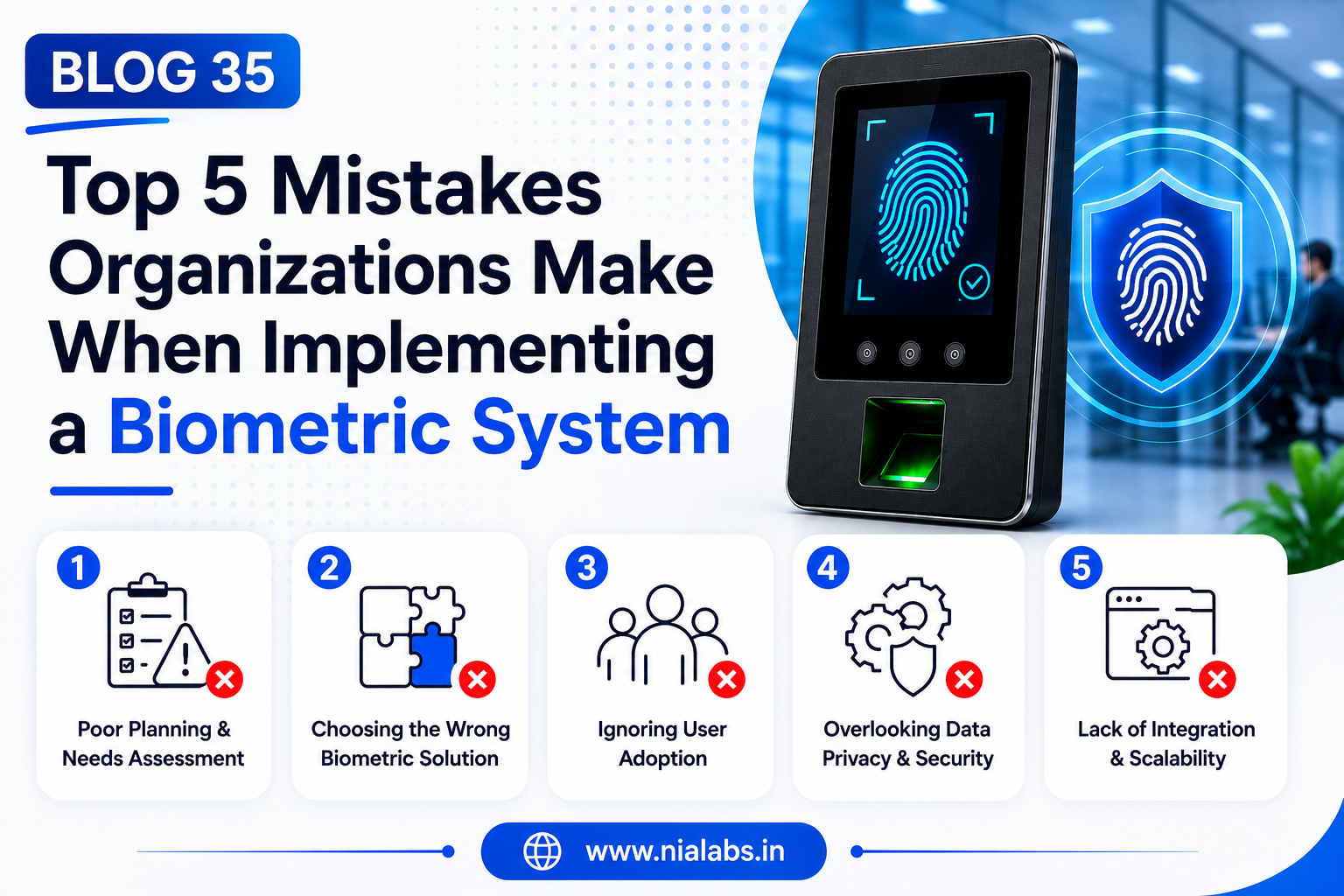
Top 5 Mistakes Organizations Make When Implementing a Biometric System
23 May, 2026
With the rapid advancements in technology in all spheres of life, organizations are quickly recognizing the critical need for biometrics as a solution to employee time attendance tracking, access control systems, and physical premises. Companies across a variety of sectors are using and integrating various biometric technologies, such as fingerprint scanners, face recognition attendance & access control systems, to make operations more efficient, avoid human errors, and provide better authentication.
Unfortunately, many businesses encounter failure because the implementation plan is weak. Choice of the wrong biometric technology, lack of emphasis on data privacy, and system maintenance would eventually lead to vulnerabilities, dissatisfaction, and inefficient work operations.
In this post, we will examine 5 frequently occurring mistakes when implementing Biometric attendance systems and how companies can successfully overcome them to achieve security, accuracy, and efficiency.
1. Overlooking Data Privacy and Compliance Aspects
A serious error that most organizations commit is to capture biometric data without having sufficient biometric data privacy and compliance measures. Biometric data, like a fingerprint or face data, is a highly personal piece of information and once provided, cannot be changed like a password.
Many organizations are providing biometric attendance or access controls without informing employees about how biometric data will be gathered, collected, stored, and protected.
With the increase in data protection and privacy laws, an organization must provide data encryption, secure storage, and limited access to the biometric information.
Additionally, companies have to acquire correct user authorization before acquiring any biometric data.
Non-compliance with biometric data could result in the following issues:
-
Data breaches/ Cyberattacks
-
Legal problems & compliance issue
-
Low employee satisfaction & trust
-
Organizational credibility
To guarantee the safety of your biometrics implementation, an organization can implement strong privacy policies, comply with standards, and conduct a regular security audit.
2. Selecting an Incorrect Biometric Technology
Another fundamental error is choosing a biometric technology without understanding business needs, environment, and workforce problems. Not all biometric solutions will be successful in all environments.
As another example, the fingerprint attendance system may have problems in the industry where workers work in an environment with chemicals, dust, and heavy machinery, and the face recognition attendance system might not be competent if low illumination conditions or large groups of people occur without proper adjustment of the camera. Most organizations look at just cost, not what actually matters, such as:
-
Accuracy and speed of authentication
-
Scalability for future needs
-
Environmental compliance
-
Ability of integration
-
Ease of use and accessibility by the end user
If an organization selects the wrong biometrics solution, then there will be incorrect attendance recording, employee dissatisfaction, increase in failures in authentication.
A biometric solution needs to be tested and evaluated by organizations before implementation. A successfully implemented biometric solution would improve user satisfaction and increase the efficiency and longevity of operations.
3. Insufficient Employee Training
No matter how sophisticated the biometrics system, its performance is critically dependent on proper employee usage. Typically, companies believe that biometric systems are intuitive and fail to invest in training when introducing the system.
The system has flaws because the employees do not enroll correctly, use devices in the wrong ways, which causes errors and frequent authentication issues. Employees can also resist because they lack the knowledge or are uneasy with having their data recorded.
A certain level of basic training, demonstration, and training on the system’s usage and security practices should be ensured. An informed workforce would ensure efficient implementation of the system.
4. Lack of System Integration & Scalability
A majority of organizations may implement biometric solutions without integrating with current software systems, such as the HR system, payroll system, access control system, etc. Poor integration results in data inconsistencies, increased manual labor, and other operational inefficiencies.
Scalability- this is another factor that is very often neglected. A system that works well with only a few employees may not work well when the company has to increase in size and extend to other locations.
To overcome these concerns, businesses should opt for scalable biometric solutions that are convenient to integrate and scalable for future developments. This guarantees a better process, management of information, and cost effectiveness.
5. Ignoring Maintenance & System Upgrades
Another error most organizations make when they install biometrics is considering the implementation a set-and-forget installation. In fact, biometric systems have to be maintained to maintain their accuracy.
It will experience failure due to hardware failure, or incompatibility between the new software and its own operations or security. Failure to monitor and update the system will cause authentication failure and subsequent business disruption.
The systems will require routine maintenance and upgrades as well as regular monitoring. A system is reliable, accurate, and will have a longer life span when it is well-maintained.
How Nialabs Helps Organizations Avoid Biometric Implementation Mistakes
The success of biometric system implementation depends on the appropriate technology, an accurate plan, secure data maintenance, and continued support.
-
Nialabs offers efficient support to avoid these common mistakes from happening within a biometric system implementation by offering secure, scalable, and easy-to-integrate biometric solutions suitable for different organizations.
-
Nialabs helps organizations in implementations, selecting the most efficient biometric technology for their needs, and for the biometric system integration with existing software, and for employee training on enrolling in the system.
-
Nialabs, it sets systems and procedures in place so that organizations will not have to worry about secure system operation and maximum efficiency.
-
Nialabs pays close attention to securing the biometric information and also to maintenance and real-time monitoring of the biometric systems to make organizations' systems stable and compliant with different standards.
The biometric attendance system with Nialabs' face recognition AI-based solution helps organizations with the security of access and implementation of the biometric system, thus reducing business risk and enhancing user experience.
Conclusion
When properly applied, biometric technology can be instrumental in security, time and attendance systems, and enhanced operating efficiencies. While many organizations fail with biometric data compliance because of a lack of adequate planning, employee training, inadequate security of data, and improper support and scaling of systems.
The right biometric technology, like Nialabs biometric solution, and rthe ight integration into the business are important. Organizations that avoid these critical mistakes would achieve higher accuracy, security, and greater user satisfaction.
When properly managed, a biometric system is an enabler of Digital Transformation, which enables enterprises to create a highly secure, efficient, and future-ready workplace for business sustainability.
✍️ Muskan Singh
Hi, I'm Muskan Singh, a content writer passionate about exploring how technology, EdTech, and SaaS are shaping the...
Show More📞 Get In Touch
We'd Love to Hear From You!
✍️ Muskan Singh
Hi, I'm Muskan Singh, a content writer passionate about exploring how technology, EdTech, and SaaS are shaping the...
Show More📞 Get In Touch
We'd Love to Hear From You!
Related Blogs
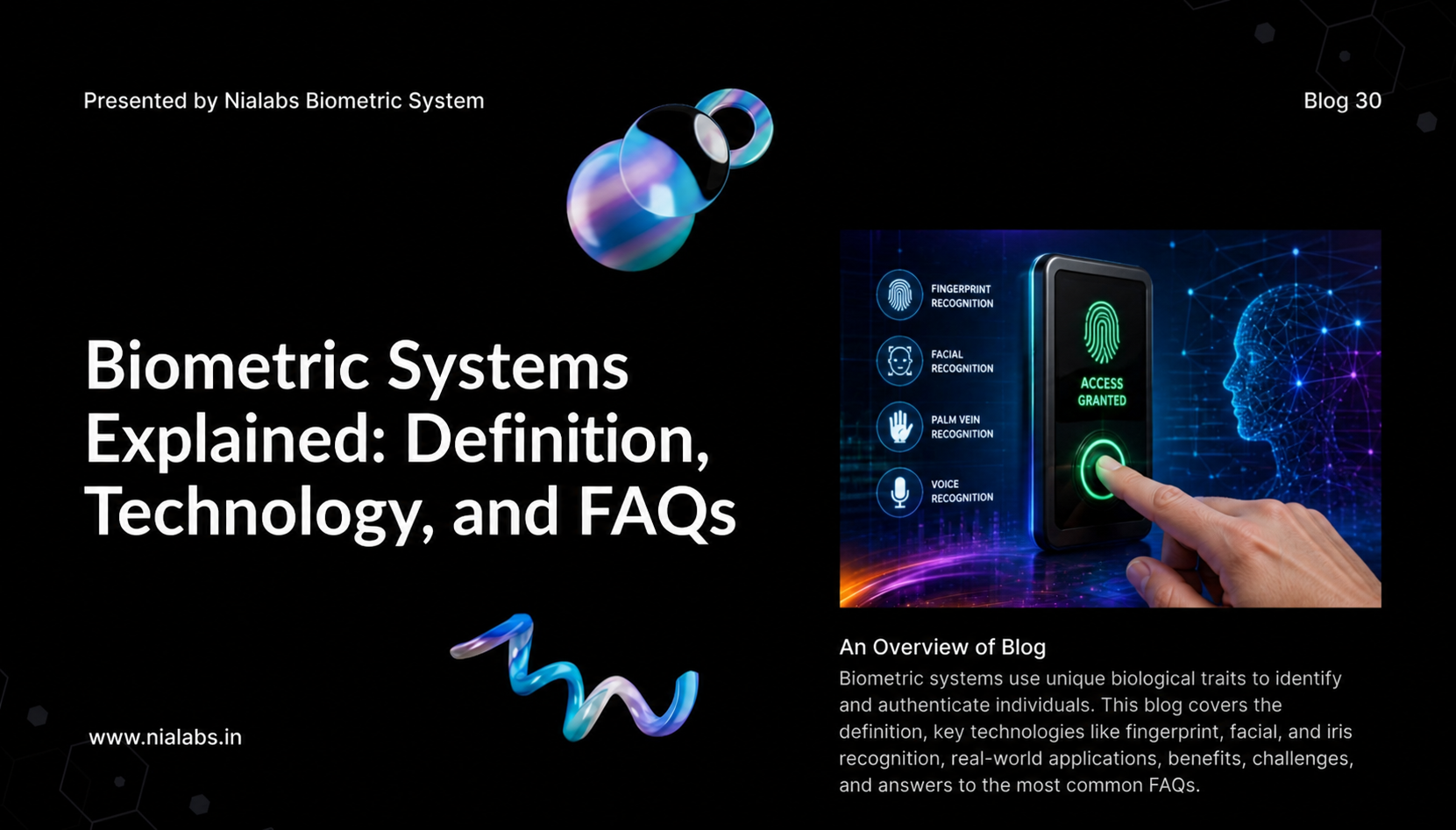
Biometric Systems Explained: Definition, Technology, and FAQs
Biometric systems use unique physical and behavioral traits like fingerprints, facial features, and iris patterns to accurately identify and verify individuals. They are widely used across government, business, and everyday applications to enhance security, reduce fraud, and enable fast, reliable authentication.
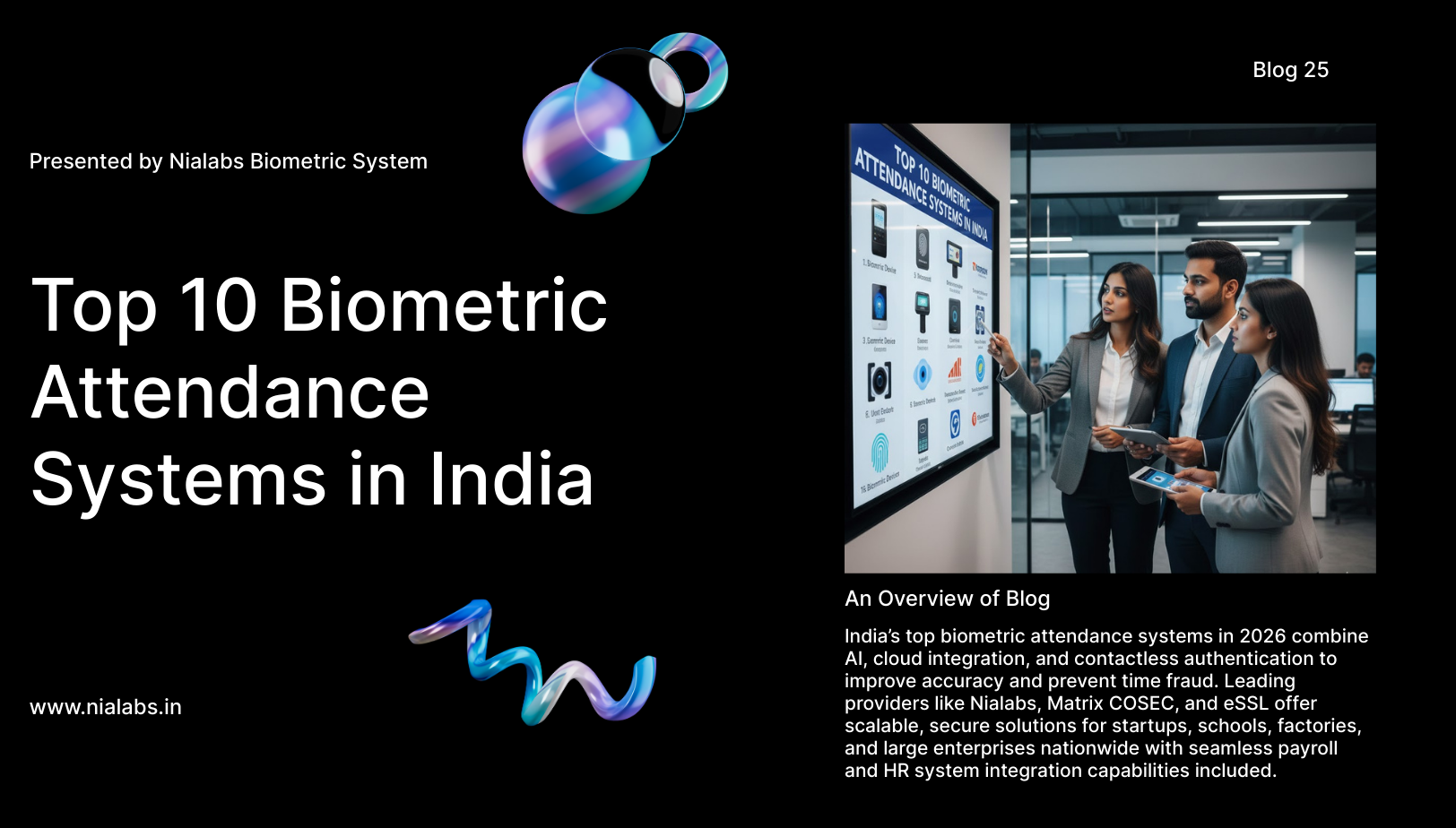
Top 10 Biometric Attendance Systems in India 2026
top 10 biometric attendance systems in India for 2026. Compare AI-based, cloud-enabled, and contactless solutions designed to improve accuracy, prevent time fraud, and streamline payroll and HR management for businesses of all sizes.
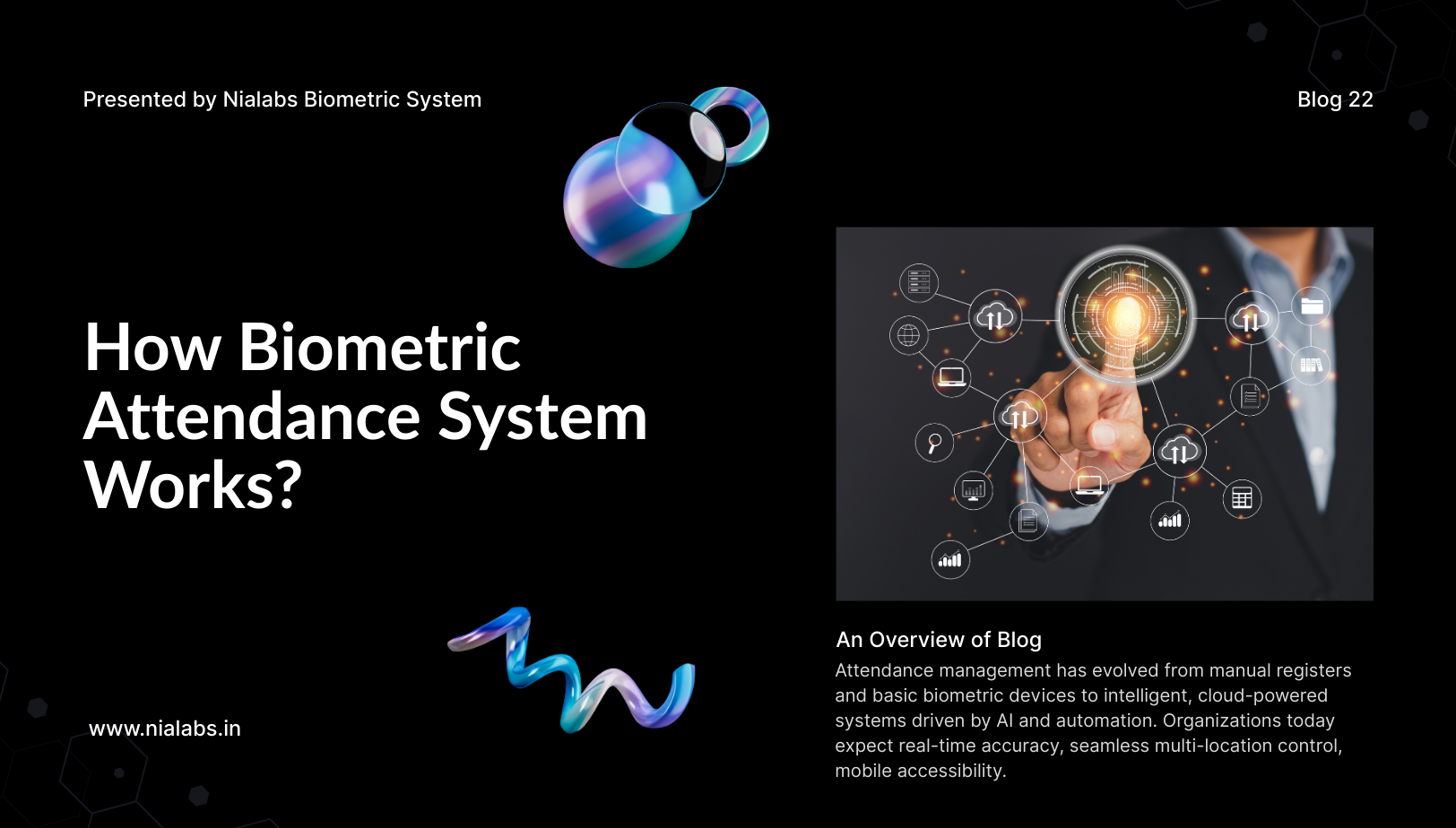
How does a Biometric Attendance System work?
Learn how a biometric attendance system works, its components, process flow, and benefits for schools, offices, factories, and enterprises.